MARANATA !!!

MARANATA !!!
Showing posts with label Crucifixion. Show all posts

Saturday, April 19, 2014

CREATION MINISTRIES International-Darkness at the crucifixion: metaphor or real history?

After creationism.org
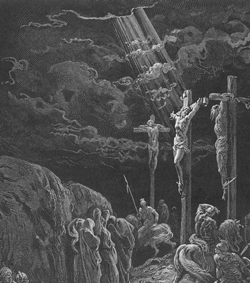
The Death Of Jesus
Published: 6 April 2007 (GMT+10)
The preternatural darkness reported at Jesus’ crucifixion was no metaphor. It was a real historical event based on eyewitness accounts and independently corroborated by a number of highly qualified ancient historians. And just as the darkness recorded in the gospels was based on real history, the reason for Jesus’s death is rooted in the real history recorded in the Book of Genesis.
According to a straightforward interpretation of Genesis as written and intended, there was a real Adam and a real Eve, a real Garden of Eden, a real fall into sin, and real consequences to wilful rebellion against the Creator. Death, suffering, disease, natural disasters, and sin were the real outcomes of the historical Fall in the garden (see also The Fall: a cosmic catastrophe). We live with the indisputable evidence of these historical events on a daily basis.
With its very foundation built upon the historical events of Genesis, Jesus’ atoning death was God’s historical antidote to mankind’s grievous sin. The God-man, the Lord Jesus Christ willingly died a brutal and humiliating death on the cross in order to atone for the sins of Adam and Eve, for our sins, and for the sins of the whole world (1 John 2:2)—available by grace, through faith in God’s promised sacrificial Lamb (Ephesians 2:8–9).
During the last three hours of Jesus’ sacrificial death on the cross, an eerie darkness struck the land. This darkness is documented by the Gospel writers Matthew, Mark, and Luke. It is also confirmed by three extra-biblical historians: Thallus, Phlegon, and Africanus. A closer look will reveal strong historical evidence for this unparalleled event.

The gospels of Matthew, Mark, and Luke

Each of these authors briefly records the three-hour darkness during Christ’s crucifixion (Matthew 27:45,
Mark 15:33Luke 23:44–45). Matthew was one of Jesus’ apostles and an eyewitness to the event. Mark was a close companion of Peter, one of Christ’s three innermost apostles. Mark also travelled with Paul, Luke, and many of the earliest Christians in the Book of Acts. Luke was a Greek physician and historian who carefully investigated the events of Christ’s life. His historical investigation was based on direct and indirect eyewitness accounts from Paul, Peter, James, Mark, Mary (the mother of Jesus), and many of Jesus’ first female followers.1 Luke is considered to be one of the most reliable historians of all time.1
J.A.T. Robinson, a liberal New Testament scholar, conducted an in-depth study in which he discovered strong historical, textual, and logical evidence for dating all of the gospels between AD 40–65.2 And Robinson was no friend of conservative biblical Christianity. Based on these dates, Matthew, Mark, and Luke would have written about the darkness a mere 7 to 32 years after the actual event.3 Compared to other ancient historical accounts, this is like a news flash. Suetonius, a Roman historian, wrote his account of Caesar crossing the Rubicon at least 110 years after the event, and it is considered to be generally reliable.4 The earliest biographies of Alexander the Great, by Arrian and Plutarch, were written over 400 years after his death, and they are considered trustworthy accounts.1 (Compare also Who was Luke and what did he write?)
Even more compelling is the fact that Rudolph Pesch, the German New Testament scholar, dates the source for Mark’s passion narrative no later than AD 37 based on language, style, grammar, and personal references.5 This is a maximum of four years after the actual event! It can be conclusively stated that the Gospel accounts of the darkness at the crucifixion are extremely early, reliable, and based on eyewitnesses.

Thallus, Phlegon, and Africanus

Thallus wrote a history of the eastern Mediterranean world since the Trojan War. Thallus wrote his regional history in about AD 52.6 Although his original writings have been lost, he is specifically quoted by Julius Africanus, a renowned third century historian. Africanus states, ‘Thallus, in the third book of his histories, explains away the darkness as an eclipse of the sun—unreasonably as it seems to me.’ Apparently, Thallus attempted to ascribe a naturalistic explanation to the darkness during the crucifixion.
Phlegon was a Greek historian who wrote an extensive chronology around AD 137:
In the fourth year of the 202nd Olympiad (i.e., AD 33) there was ‘the greatest eclipse of the sun’ and that ‘it became night in the sixth hour of the day [i.e., noon] so that stars even appeared in the heavens. There was a great earthquake in Bithynia, and many things were overturned in Nicaea.’7
Image Locutus Borg

Solar annular (ring) eclipse; an eclipse could NOT have caused darkness at the crucifixion because they don't occur during the full moon
Annular (ring) eclipse. An eclipse could NOT have caused darkness at the crucifixion because they don’t occur during the full moon.
Phlegon provides powerful confirmation of the Gospel accounts. He identifies the year and the exact time of day. In addition, he writes of an earthquake accompanying the darkness, which is specifically recorded in Matthew’s Gospel (Matthew 27:51). However, like Thallus, he fallaciously attempts to interpret the darkness as a direct effect of a solar eclipse.
Africanus composed a five volume History of the World around AD 221. He was also a pagan convert to Christianity. His historical scholarship so impressed Roman Emperor Alexander Severus that Africanus was entrusted with the official responsibility of building the Emperor’s library at the Pantheon in Rome. Africanus writes:
On the whole world there pressed a most fearful darkness; and the rocks were rent by an earthquake, and many places in Judea and other districts were thrown down. This darkness Thallus, in the third book of his History, calls, as appears to me without reason, an eclipse of the sun. For the Hebrews celebrate the passover on the 14th day according to the moon, and the passion of our Savior falls on the day before the passover; but an eclipse of the sun takes place only when the moon comes under the sun. And it cannot happen at any other time but in the interval between the first day of the new moon and the last of the old, that is, at their junction: how then should an eclipse be supposed to happen when the moon is almost diametrically opposite the sun? Let opinion pass however; let it carry the majority with it; and let this portent of the world be deemed an eclipse of the sun, like others a portent only to the eye. Phlegon records that, in the time of Tiberius Caesar, at full moon, there was a full eclipse of the sun from the sixth hour to the ninth—manifestly that one of which we speak. But what has an eclipse in common with an earthquake, the rending rocks, and the resurrection of the dead, and so great a perturbation throughout the universe? Surely no such event as this is recorded for a long period.8
Africanus rightly argues that a solar eclipse could not have occurred during the lunar cycle of the Passover, as this diagram shows. He also questions the link between an eclipse, an earthquake, and the miraculous events recorded in Matthew’s Gospel. Eclipses do not set off earthquakes and bodily resurrections. We also know that eclipses only last for several minutes, not three hours. For Africanus, naturalistic explanations for the darkness at the crucifixion were grossly insufficient, as he showed by applying real science.

Local or global?

Many have pondered whether or not the darkness was a regional or global phenomenon. A vast majority of biblical translations records that the darkness was ‘over the land’, ‘over all the land’, or ‘over the whole land’. However, some translations of Luke’s account state the darkness was ‘over all the earth’ or ‘over the whole earth’.
What we do have is a plethora of extremely early, historically reliable, and highly respected sources for the darkness during the crucifixion.
The Greek has the usual word for earth, ,9 here, from which we derive ‘geology’. The language of most translations appears to strongly suggest that the darkness was a local or regional phenomenon, which is a possible rendition in some contexts. All the same, if it was regional, it was over an extensive region. Dr Paul Maier, professor of ancient history at Western Michigan University, notes ‘This phenomenon, evidently, was visible in Rome, Athens, and other Mediterranean cities.’7
On the other hand, Africanus writes of the darkness as a global event. Tertullian, the famous second century apologist, also hails the darkness as a ‘cosmic’ or ‘world event’. Appealing to skeptics, he wrote:
At the moment of Christ’s death, the light departed from the sun, and the land was darkened at noonday, which wonder is related in your own annals, and is preserved in your archives to this day.10
Apparently, Tertullian could state with confidence that documentation of the darkness could be found in legitimate historical archives.
It is plausible that future archaeological discoveries could lend stronger support to the notion that the darkness was indeed witnessed throughout the entire world.

Why aren’t there more sources?

Many skeptics ask why John’s Gospel does not mention the darkness at the crucifixion. Simon Greenleaf, of Harvard Law School, said it best about the gospels:
There is enough of a discrepancy to show that there could have been no previous concert among them; and at the same time such substantial agreement as to show that they were all independent narrators of the same great transaction.11
In other words, independent narrators will sometimes record different secondary details about the same exact event.
Many skeptics also ask why other early historians such as Josephus, Tacitus, Suetonius, and Pliny the Younger fail to mention the darkness. But the skeptics are committing the fallacy of arguing from silence. It is unreasonable to expect every contemporary writer to include every event that happened—and there are good reasons not to expect these specific authors to mention the darkess (see Thallus: Darkness Rules). What we do have is a plethora of extremely early, historically reliable, and highly respected sources for the darkness during the crucifixion. The list of Matthew, Mark, Luke, Thallus, Phlegon, Africanus, and Tertullian is impressive indeed!

Conclusion

There is powerful evidence for the historicity of the darkness at Christ’s crucifixion. It was a real historical event, and its very existence was rooted in the real historical events in Genesis. As the last Adam
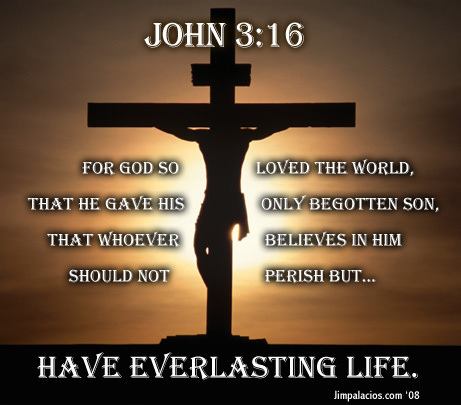
(1 Corinthians 15:45), Christ came to suffer the horrible and ignominious death of crucifixion in order to die for the sins of the world. ‘For God so loved the world, that he gave his only begotten Son, that whosoever believes in him shall not perish but have eternal life (John 3:16).’

References

  1. Craig, William Lane, The Evidence for Jesus, 2005; see also Luke: A consideration of Gospel authorship and publication dateReturn to text.
  2. Robinson, John A.T., Redating the New Testament, Wipf & Stock Publishers, 2000. Return to text.
  3. Cf. Wenham, John, Redating Matthew, Mark and Luke, IVP, 1992; see reviewReturn to text.
  4. Gaius Suetonius Tranquillus, The Lives of the Twelve Caesars 1:31–33, AD 121. Return to text.
  5. Strobel, L. The Case for Christ, p. 220, Zondervan, Grand Rapids, MI, 1998. Return to text.
  6. Habermas, Gary. The Historical Jesus, pp. 196-7, College Press Publishing Company, 1996. Return to text.
  7. Maier, Paul. Pontius Pilate (Wheaton, Ill.: Tyndale House, 1968), p. 366. Phlegon’s citation is a fragment from Olympiades he Chronika 13, ed. Otto Keller,Rerum Naturalium Scriptores Graeci Minores, 1 (Leipzig Teurber, 1877), p. 101.
    Return to text.
  8. http://www.christian-thinktank.com/jrthal.html Return to text.
  9. The Greek phrase in Luke 23:44 is καί σκότος εγένετο έφ ‘όλην τήν γήν (kai skotos egeneto eph holēn tēn gēn), ‘and darkness came upon the whole earth’.Return to text.
  10. Sanders, Oswald. The Incomparable Christ, p. 203, Moody Publishers, 1982. Return to text.
  11. Greenleaf, Simon. The Testimony of the Evangelists, vii, Baker, Grand Rapids, MI, 1984. Return to text.

Saturday, March 30, 2013

DAVE HUNT : Scripture reveals the answer OF .CRUCIFIXION WEEK

DAVE HUNT : Scripture reveals the answer OF .CRUCIFIXION WEEK

  • 578053_10200737825678162_807943999_n
  • Question: I understand that you believe that Jesus died on the cross on Thursday, not Good Friday. Why do you say that, and does it matter?

    Response: Scripture reveals the answer. Through the writings of Jeremiah, Daniel learned that the Babylonian captivity would last 70 years (Dn 9:2). God had commanded that each seven years the Hebrew slaves should be set free, debtors forgiven, and the land given a one-year sabbath of rest (Ex 21:2; Lv 25:2-4; Dt 15:1,2,12). For 490 years Israel had disobeyed this precept. In judgment, the Jews became slaves of Babylon while their land rested for 70 years of sabbaths.

    Daniel confessed this sin, pondering and praying, and was given the revelation that another period of 490 years (70 weeks of years) lay ahead for his people and for Jerusalem (9:24). Then all of Israel’s sins would be purged, all prophecy fulfilled and ended, and the Messiah would reign on David’s throne in Jerusalem. These 70 weeks of years were to be counted “from the going forth of the commandment to restore and to build Jerusalem” (v. 25). That crucial date is given to us in Scripture.

    Nehemiah tells us: “in the month Nisan, in the twentieth year of Artaxerxes the king” (2:1), he received the authorization to rebuild Jerusalem. When the day of the month was not given, the first day was intended. There were several Artaxerxes, but only one, Longimanus, who ruled more than 20 years—from 465-425 BC. Thus we have the key date from which this incredible prophecy was to be calculated: Nisan 1, 445 BC.

    At the end of 69 of these “weeks” (7×69 = 483 years) “Messiah the Prince” would be made known to Israel (Dn 9:25) and then “be cut off [slain]” (v. 26). Counting 483 years of 360 days each (the Hebrew and Babylonian calendar), a total of 173,880 days from Nisan 1, 445 bc brings us to Sunday, April 6, ad 32. On that very day, now celebrated as Palm Sunday, Jesus rode into Jerusalem on a young donkey and was hailed as Messiah the Prince! (See also Zec:9:9)

    There is, however, an even deeper meaning to the phrase, “In the fulness of time”: April 6, ad 32, on the Hebrew calendar was the tenth of Nisan. On that day, the Passover lamb was taken from the flock and placed under observation for four days to make certain that it was “without blemish.” During the same four days, Christ, whom John the Baptist had hailed as “the Lamb of God, which taketh away the sin of the world” (Jn:1:29), was likewise on display before Israel. On the fourteenth of Nisan, “the whole assembly of the congregation of Israel shall kill it [the passover lamb] in the evening [between 3:00 and 6:00 pm]” (Ex 12:6). It was during that precise time period that Jesus died on the cross!

    In fact, the rabbis had determined not to arrest Jesus during Passover, “lest there be an uproar of the people” (Mk 14:2). Yet that was when He had to die. Judas was not only Satan’s pawn but God’s. Even the “thirty pieces of silver” for which he so shrewdly bargained fulfilled prophecy (Zec:11:12-13

      Peter would declare in his Pentecost sermon, “Him…delivered by the determinate counsel and foreknowledge of God, ye have taken, and by wicked hands have crucified and slain” (Acts:2:23). Paul wrote, “Christ our passover [lamb] is sacrificed for us” (1 Cor:5:7).

    The fourteenth of Nisan began at sunset Wednesday evening. That night, Jesus and His disciples had the “last supper” in the upper room where they were preparing to eat the Passover the following night. At this meal “ before the feast of the passover ” (Jn:13:1), Jesus told His disciples, “One of you shall betray me” (Jn:13:21). Earlier He said, significantly, “I tell you before…that, when it is come to pass, ye may believe that I am he” (Jn:13:19). The word “he” is in italics and does not appear in the original. Jesus was declaring once again to His disciples that He was Yahweh, the I AM of Israel, who tells beforehand what will happen and makes certain that it comes to pass (Is 46:9-10).

    Arrested by the Judas-led troop in the Garden later that night, Christ was taken secretly to the palace of Caiaphas, the high priest. A sham trial with hastily called false witnesses convened sometime after midnight and condemned Christ to death as dawn broke. Pilate, the Roman governor, was notified of the emergency. Hurriedly taken down side streets, the prisoner was received into the citadel at “the third hour” (Mk 15:25), (about 9:00 am), Nisan 14. All over Israel preparations were underway to kill the Passover lamb, which was to be eaten that night.

    Pilate let his citizens decide the prisoner’s fate. The bloodthirsty rabble turned against the One who had miraculously healed and fed so many of them. “Crucify him, crucify him” (Lk 23:21). “His blood be on us, and on our children” (Mt 27:25).

    Shortly before noon, Jesus, scourged and beaten, was led out of the city to “the place of the skull.” By noon, the One whom Jerusalem, in fulfillment of prophecy, had hailed as its long-awaited Messiah, was hanging naked on the center cross between two thieves. Man had crucified his Creator!

    The next three hours of that Thursday afternoon the earth was darkened mysteriously (Mt 27:45) as God “laid on him the iniquity of us all” (Is 53:6). Thursday? Not “Good Friday”? Indeed not. Jesus himself had said, “For as Jonas was three days and three nights in the whale’s belly; so shall the Son of man be three days and three nights in the heart of the earth [i.e., “Abraham’s bosom”]” (Mt 12:40; Lk 16:22). The gospel includes the declaration that Christ “rose again the third day” (1 Cor:15:4).

    Had Christ been crucified on Friday, He couldn’t possibly have spent three days and three nights in the grave by Sunday morning. We are distinctly told that the angel rolled away the stone “as it began to dawn toward the first day of the week” (Mt 28:1). The tomb was already empty, so Christ must have risen from the dead sometime prior to dawn.

    Wednesday, Thursday, Friday—does it really matter? Yes! The day of our Lord’s crucifixion is of the utmost importance. If Christ was not three days and three nights in the grave, then He lied. His death, to fulfill prophecy, had to occur at the very time the Passover lambs were being slain throughout Israel. It is an astronomical fact that Nisan 14, AD 32, fell on Thursday.

    “And it was the preparation of the passover ….The Jews therefore…that the bodies should not remain upon the cross on the sabbath day…besought Pilate that their legs might be broken, and that they might be taken away” (Jn:19:14,31). Wait! Not a bone of the Passover lamb (Ex 12:46) or of the Messiah (Ps:34:20) could be broken. Not knowing why he did it, “one of the soldiers with a spear pierced his side” (Jn:19:34), fulfilling yet another scripture: “they shall look upon me whom they pierced” (Zec:12:10).

    John explains that the “Sabbath,” which began at sunset the Thursday Christ was crucified, “was an high day.” It was, in fact, the first day of the Feast of Unleavened Bread, of which the first and last days were special sabbaths. It ended Friday at sunset, immediately followed by the weekly sabbath that ended at sunset on Saturday. Thus two sabbaths followed Christ’s death, preventing the women from coming to the grave until the third day, Sunday morning.

    The rabbis thought that having Jesus crucified proved He wasn’t the Messiah. In fact, it was one more proof that He was! The soldiers took His clothes for a souvenir and gambled for His robe (Ps:22:18; 69:21); He was given vinegar mixed with gall to drink, nails were driven into His hands and feet, and a spear pierced His side, drawing forth the blood of our redemption—all in fulfillment of prophecy!

Top of Form

All that I KNOW ….is that Yeshua lived and DIED….and rose…….for my sins. HE IS.

Jesus died on Passover. Passover “day” or event changes from year to based on the Jewish month of Nisan. The Bible says that Jesus rose 3 days later. Friday to Sunday morning is not 3 days. The Edict of Milan 313 AD, Emporer Constantine and Licinius affirmed Galerius decision to legalize Christianity and hence changed our celebration of the Feasts of the Lord… specifically Passover for Christians to the pagan feast of Astarte (which became our Easter) along with Good Friday as the death instead of Passover. Jesus referred to Jonah being three days in the belly of the whale… as a type of his death. When he saiys three days, he means three days.

This is the fingerprint of God, people. Do not ignore it. If He has revealed it in His Book, then He obviously intended for us to see it, read it, understand it and be BLESSED by it.

It IS important because Jesus fulfilled the Scriptures.

    • 1798_10151350820307903_2024551077_n 

http://www.torahtimes.org/pbook/default.html http://www.torahtimes.org/pbook/Review%20Of%20Michael%20Rood.pdf

http://www.torahtimes.org/pbook/Review%20Of%20Michael%20Rood.pdf


Saturday, March 23, 2013

PASSION WEEK INFOGRAFIC-PASSION WEEK EVENTS CHART-Follow by day, and by hour, with the Bible verse references

PASSION WEEK EVENTS CHART – Follow by day, and by hour, with the Bible verse references

These are wonderful charts that you can print our, or save on your computer and follow the events of Passion Week. If you click on each of the 3 pictures, it will take you to the full size image. Josh Byers is a very resourceful and talented individual who comes up with all kinds of maps and charts based on Biblical passages. You can learn more and see more at http://joshbyers.com

CLICK on Letter Size Light to go to site - CLICK again on photo to ENLARGE

FROM rodi -http://rodiagnusdei.wordpress.com/2013/03/23/passion-week-events-chart-follow-by-day-and-by-hour-with-the-bible-verse-references/

PASSION WEEK INFOGRAFIC

March 1, 2013

This week’s infographic, The Passion Week, is a chronological timeline of the major events that happened during Jesus’ last week before he died and rose again.

Each event is cross-referenced with the gospel(s) it is found in. I have also included major location changes as well as the relative possible timing of the Last Supper, Trial and Crucifixion.

This graphic is not officially part of Project 66 – just a bonus.

As always the infographic is available for free in two formats though I’ve added a light version to the letter format this time.

Purchase High Res PDFs & Source Files
The-Passion-Week-Poster
http://joshbyers.com/2013/03/the-passion-week-infographic/

Monday, January 21, 2013

GOD’S WONDERFUL PLAN OF SALVATION-Salvation, Atonement, and Redemption (It’s not that complicated!)


 GOD’S WONDERFUL PLAN OF SALVATION

Salvation, Atonement, and Redemption (It’s not that complicated!)


Author: Vlad Petrusevich
Source: BibleViews.com

THE LIGHT OF THE WORLD

The Bible is the word of God, the everlasting Truth. It contains the account of creation, man’s disobedience to God, and the agony which came upon man because of sin. It also tells us of God’s love for man in making a plan to redeem him. It tells of a Savior who was born, who died for man’s sin, and was raised from death for his [man's] justification. Whosoever believes its message may have forgiveness of sins, peace of mind, love for all men, power over sin, and a living hope of eternal life. SALVATION IS GOD’S FREE GIFT TO MAN.

The Word of God

GOD’S WONDERFUL CREATION

Long, long ago there was no world at all. But God has always been. God, the Creator, is everywhere, is almighty, and all wise. By His spoken word all things were created in perfection. God said, “Let the dry land appear,” and it was so. He created the hills and valleys covered with grass, beautiful flowers, and trees of every kind. He created the fowl, and the birds which sing so many different songs. God created all the animals, great and small, who roam the lands, as well as the small insects and reptiles that live on and in the ground. He created the lakes and oceans for the dwelling place of the fish and all water creatures. He made the continents on which the people of every nation could live. God made the moon to give light at night, and He decked the sky with thousands of beautiful, twinkling stars. last of all God formed man from the dust of the earth. He breathed into his nostrils the breath of life, and he became a living soul. God called him Adam.

Seeing that Adam needed a helper, He caused him to fall into a deep sleep. Then taking a rib from him, God formed a woman with it, and brought her to Adam. Adam knew that Eve was bone of his bones and flesh of his flesh, and he loved her. Eve loved Adam too. They had sweet fellowship with each other. This is God’s plan for a family unit. God created everything in six days, and on the seventh day He rested. He looked upon everything that He had made, and behold, it was very good. So God blessed the seventh day and sanctified it as a day of rest for man. God wanted Adam and Eve and all of their descendants to have a day of rest every week, that they might think and talk about God and all His wonderful creation. This would help them to love and obey Him.

The Bible also tells us of a fallen angel called Satan, or the devil. He was cast out of Heaven upon the earth and he is the source of all evil. Because of him sorrow, suffering, sickness, and death came into the world.

THE TRAGIC BEGINNING OF SIN

God loved Adam and Eve. He made a beautiful garden for them to live in. It was called the garden of Eden. Adam was to take care of it. In this garden were many kinds of vegetables and fruit trees for them to eat from. There was one tree called the tree of the knowledge of good and evil. God told Adam that he should not eat of this tree, for in the day that he would eat thereof, he would surely die. One day Satan came to Eve and told her a lie. He said, “Ye shall not surely die . . . ye shall be as gods, knowing good and evil.”

garden_of_eden

As she looked upon the tree with it’s beautiful fruit, she thought it must be good for food, and eating of it would bring wisdom. So she took some fruit and gave also to Adam, they both did eat of it. Immediately they felt very strange in their hearts. They had never felt this way before. They knew now that they had done something very wrong. They were both ashamed of themselves as they thought of their disobedience. Fear came into their hearts as they thought of meeting God. So they hid themselves among the trees of the garden.

In the cool of the day God called Adam and said, “Where art thou?” They could not be hid from God, so they came into His presence and acknowledged their wrongdoing. God caused them to understand what a great sin it was to disobey His command. He told them that both must be punished according to their evil deeds. They would now have to suffer pain and trouble all the days of their lives. They would now have to work hard for their living. Their bodies would become old and worn out. They would die and return to dust again.

As they were driven from this beautiful garden, God placed Cherubims at the east of the garden of Eden, and a flaming sword to keep the way of the tree of life. They began to understand what it meant to sin and what great sorrow it brings.

THE SAD RESULT OF SINNING

Adam and Eve were very sorry for their sin of disobeying God. God still loved them, and made them coats of skins, and clothed them. He gave them the promise of a Savior who would come some day to bruise the serpent’s head.

The first two sons born to Adam and Eve were Cain and Abel. They brought an offering unto the Lord. Cain brought of the fruit of the ground. Abel brought of the firstborn of his flock. This lamb’s blood was shed, and was a type of the promised Redeemer who, many years later, came as the lamb of God to take away the sin of the world (John 1:29). Jesus died as an innocent lamb on the cross for our sins. Abel’s sacrifice pleased God, but God was not pleased with Cain nor his offering.

We must not neglect to do what God wants us to do. We now have His Spirit and Word which teach us how to live and what His will is for us.

cain_and_abel

When Cain noticed that God was pleased with Abel and with his offering, but not with his, envy and hatred toward Abel entered his heart. Then one day as they were together in the field, Cain rose up and killed his brother Abel. God spoke to Cain and said, “Where is Abel thy brother?” Cain did not like to tell the truth, so he said, “I know not: Am I my brothers keeper?” Cain had not been obedient in following the Lord’s instructions. God had warned him before he killed Abel. He told Cain that if he would do well he would be accepted, but if not, sin was lying at the door. How much better it would have been had he corrected his attitude and loved his brother. Now his brother’s blood was calling to God from the ground. Cain was cast out from the presence of the lord and society. He became a fugitive and a vagabond in the earth.

GOD SO LOVED THE WORLD THAT HE GAVE HIS SON

“For unto you is born this day… a Savior, which is Christ the Lord” (Luke 2:11).

After Abel was dead and Cain had gone away from home, Adam and Eve had another son. His name was Seth. He grew up to be a good man. God blessed his descendants with many godly leaders, kings, and prophets, who heard and believed God’s wonderful promises of a Savior who would someday be born. Abraham, especially, believed God; for which he was called the friend of God. He was told that through him and his descendants all the families of the earth would be blessed.

birth_of_Christ

Many hundreds of years later God fulfilled the promise He had made of sending a Savior to the world. It happened, in a supernatural way, in the little town of Bethlehem of Judea. There In a stable, a babe was born to Mary; who was a virgin. She wrapped Him in swaddling clothes and laid Him in a manger. (Read Luke 2:1-7). An angel told Mary that the baby’s name was to be called Jesus (meaning Savior). He was to become a great leader who would teach the people many things about God. Jesus grew up much like other children. He was loved and favored by many. At the age of twelve He was wiser in the word of God than many doctors and lawyers of Jerusalem. He seemed to know all about the law and prophets. No one could ask Him a question that He could not answer. He had great interest in the religious activities of His people. When He was about thirty years old, He took part in religious services. Once He read an Old Testament prophecy about the coming Messiah. When He had finished reading, He said to the people, “This day is this scripture fulfilled in your ears.” He taught the people as one having authority. He preached that the Kingdom of God was at hand, and that repentance was necessary for entrance into the Kingdom. He taught people to worship God in humility and sincerity–from the heart. He rebuked the proud and unbelieving people of their sins, and preached the Gospel of love to the poor and needy.

JESUS HAS POWER OVER DEATH Jesus said, “I am the resurrection, and life: He that believeth in Me, though he were dead, yet shall live” (John 11:25).

Jesus did many miracles, proving to the people that He was the promised Savior sent from God. He healed the sick, made the blind to see, caused the deaf to hear, cast out devils and raised the dead to life. Once He walked on the water and calmed the stormy sea by His words. His words spoken to a fig tree were so powerful, that it was found dried up from the roots the next day. At one time He fed more than five thousand hungry people with five loaves of bread and two fishes. when all had enough to eat, there remained twelve baskets full. Fishermen caught large numbers of fish when nets were cast at His command. One day Jesus met ten lepers who had heard of His fame. They cried, “Master have mercy on us.” At His command they were cleansed.

Large crowds followed Jesus daily, whether He was in town, traveling in the roads, or in the hilly country. The people felt blessed who heard “the gracious words which proceeded out of his mouth.” Some said, “Never man spake like this man”. Others were amazed and glorified God saying “We never saw it on this fashion.”

He began to tell the people that He was the Son of God, and that God was His Father. All who believed His words were made happy. He told those who believed, that they were children of God. Jesus said to His disciples, ““I go to prepare a place for you. And if I go and prepare a place for you, I will come again, and receive you unto myself; that where I am, there ye may be also“. (John 14:2-3). (This place in Heaven is for all true Christians).

“Come, ye blessed of My Father, inherit the kingdom prepared for you from the foundation of the world” (Matthew 25:34).

JESUS DIED FOR OUR SINS

“When they were come to Calvary, there they crucified him” (Luke 23:33).

The scribes and Pharisees were greatly annoyed at Jesus and His teaching. He had often reproved them for their honor seeking in religion and unlawful money-making practices. They were very jealous and envious of Jesus, because so many people believed in Him, followed Him, and praised Him. They feared that the people might make Jesus their king.

They tried to make Jesus say or do things that would cause the people to lose faith in Him, but Jesus was too wise for them. They were not able to find occasion to accuse Jesus to the common people. Their hatred and anger grew as Jesus’ popularity continued to increase. Their ill will and hatred toward Jesus became so great that they made plans to put Him to death.

They took Jesus to court and charged Him as an evildoer and trouble maker in the community. They brought many false charges against Jesus. Then they took Him before Pontius Pilate, the Roman governor of Judaea. Pilate could find no fault in Him, so Pilate was going to release Jesus and set Him free. But the accusers of Jesus turned into a mad mob and cried, “Crucify Him, crucify Him.” When Pilate heard their angry cries and threats, he gave in to their demands and turned Jesus over to them. They took Jesus and put a crown of thorns on His head and a rod in His hand. In mockery they called Him king. They spit in His face and beat Him cruelly. They finally nailed Him to the cross and left Him there to die.

Calvary

Jesus was put to death just as the innocent lamb that Abel offered on an altar hundreds of years before. Abel had offered his lamb as a type of the lamb of God who would die for the sin of the world. Many prophets of old had likewise foretold of Jesus’ suffering and death. John the Baptist said, “Behold the Lamb of God, which taketh away the sin of the world”, (John 1:29). “For God so loved the world, that He gave His only begotten Son, that whosoever believeth in Him should not perish, but have everlasting life.” (John 3:16)

Salvation

JESUS AROSE FROM THE DEAD TO SET US FREE

“He is not here: for He is risen, as He said. Come, see the place where the Lord lay” (Matthew 28:6).


The third day after the death and burial of Jesus, very early, upon the first day of the week, several women came to the tomb to anoint the body of Jesus. They were surprised to find the tomb empty. The body of Jesus was not there. Their hearts were troubled. Then, suddenly, two angels stood by them in shining garments. They said, “Why seek ye the living among the dead? He is not here but is risen”. (Luke 24:5,6) Upon this they quickly went back to tell the disciples what they had seen and heard. The disciples could not believe their story. So Peter and John went to investigate for themselves. They, too, found the tomb empty and as they entered they saw the linen clothes lie, and the napkin that had been wrapped about Jesus’ head neatly folded as if by gentle hands, placed separately. When they saw these things they believed the story of the women. In the evening of the same day the disciples were together behind closed doors for fear of the Jews. Then Jesus suddenly stood in the midst of them and said, “Peace be unto you“. He showed them His pierced hands and side that they might believe. When they saw the lord they were glad and believed that He was the same Jesus who had been crucified and that He had risen from the dead. After this Jesus showed Himself to many people as full proof of His resurrection.

He_is_alive!

This bright morning when Jesus arose from the dead is still the most glorious day in all history. For on this day, God’s wonderful plan of Salvation was completed. Now all who receive Jesus into their hearts, even though they die and are buried, shall resurrect and live forever in Heaven. Jesus said, “Because I live, ye shall live also“(John14:19).
This wonderful plan of salvation is made effective by faith alone, to all who believe that Jesus Christ is God, in His sin-atoning death, and in His literal, physical resurrection.

“If thou shalt confess with thy mouth the Lord Jesus, and shalt believe in thine heart that God hath raised Him from the dead. thou shalt be saved” (Romans 10:9).

Dear Reader: Have you enjoyed reading this absolutely truthful and impressive account of life and death? God is speaking to your heart. What is your response? Will you repent and believe the Gospel? If you surrender to God you will receive a love for righteousness and power over your sin. You will also want to witness to others of what the Lord has done for you. The Scriptures tell us in Romans 10:11 that no one who believes in Jesus Christ shall be ashamed.

“Neither is there salvation in any other: for there is none other name under heaven given among men, whereby we must be saved” (Acts 4:12).

Do not delay. Come to Jesus today.


Repent

The text of this tract is Vlad Petrusevich’s adoption of Leland M. Haines’ writings.
For Free Distribution and Copy – Not To Be Sold
You are welcome to make copies of the above article provided you show the bibleviews.com source.

GOSPEL TRACT AND BIBLE SOCIETY
P. O. Box 700
Moundridge, Kansas 67107 U.S.A.

Published by the Church of God in Christ, Mennonite
Printed in U.SA

For more read Redemption Realized Through Christ.
Published by Biblical Viewpoints Publications.
See Bibleviews Books
This page is presented by:

Biblical Viewpoints Publications
63100 County Road 111
Goshen, IN 46526
Phone: 574-875-8007

May God’s grace and peace be with you as you study His Word.

 REBLOGGED FROM:
 http://pilgrimpassing.com/2013/01/22/salvation-atonement-and-redemption-its-not-that-complicated/#comment-825
Related articles