MARANATA !!!

MARANATA !!!
Showing posts with label Henry Morris. Show all posts

Sunday, June 21, 2015

LOVE OF THE FATHER FOR THE SON-Henry Morris

Christianity can be condensed into four words: Admit, Submit, Commit and Transmit. -Samuel Wilberforce


buriram-isan-ban-kruat-thailand-sky-cloud-sun-light-rays

Love of the Father for the Son


11401581_1002728093070965_3653008188951254770_nby Henry Morris, Ph.D.

“The Father loveth the Son, and hath given all things into his hand.” (John 3:35)

The gospel of John, in a special sense, emphasizes the love in the divine Trinity of the heavenly Father for the Son. The words “love” and “Father” and “Son” occur more in this book than in any other book of the Bible, and there are at least eight references to this love in John’s gospel.

The first is in our text above, revealing that the Father has entrusted the care of the whole creation to the Son whom He loves. He has also shown Him everything in creation: “For the Father loveth the Son, and sheweth him all things that himself doeth” (John 5:20).

The Father also loved the Son because of His willingness to die for lost sinners. “Therefore doth my Father love me, because I lay down my life, that I might take it again” (John 10:17).

Then in the upper room, as Christ prayed to His Father, it was revealed that this divine love had existed in eternity, and therefore must be both the root and the measure of all forms of true love ever since. “Father . . . thou lovedst me before the foundation of the world” (John 17:24).Parental love, marital love, filial love, love of country—all types of genuine love—are derived ultimately from this eternal love of the Father for the Son.

And it is this love that can also be in us, if we will have it.“As the Father hath loved me, so have I loved you. . . . If ye keep my commandments, ye shall abide in my love; even as I have kept my Father’s commandments, and abide in his love” (John 15:9-10).

It was thus He prayed (and still prays) for us: “That the world may know that thou . . . hast loved them, as thou hast loved me. . . . And . . . that the love wherewith thou hast loved me may be in them, and I in them” (John 17:23, 26)HMM

http://www.icr.org/article/8711

Evidence for Creation

icr_logo_faebc0_fade_right

1385638_1584615438477994_5681699106516650421_n

11217805_1064449573583578_4286933013558090886_n

Friday, February 14, 2014

THE POWER OF LOVE by Henry Morris III, D.Min.


The Power of Love

Though I speak with the tongues of men and of angels, but have not love, I have become sounding brass or a clanging cymbal. And though I have the gift of prophecy, and understand all mysteries and all knowledge, and though I have all faith, so that I could remove mountains, but have not love, I am nothing. And though I bestow all my goods to feed the poor, and though I give my body to be burned, but have not love, it profits me nothing. (1 Corinthians 13:1-3)

The term “love” brings up all sorts of ideas in our widely mixed Western world. The media tend to picture love with desire and feelings and most often promote an equation of love with lovemaking—especially when love is the result of chemistry that bursts into passionate magic. Most of today’s thriving online matchmaking services market their brand of “happily ever after” using personality tests or compatibility pairing—and all of them brag about their success rates.

Speed-dating services and companies like It’s Just Lunch—along with Zoosk, OurTime, ChristianMingle, SingleParentMeet.com, and a host of others—promise to find love for you with “that special someone.” eHarmony alone has more than 15 million members and Match.com has more than 21 million.1 One reliable source estimates that the dating industry brings in over one billion dollars in revenue each year in the U.S. alone, and the average client spends well over two hundred dollars per year to find the “right person.”1

Reasonable, you might say, if real love is found.

It is interesting to note, however, that although the Bible does validate physical lovemaking in marriage as the purpose and design of the Creator, the concept of recreational sex outside of marriage is never promoted in Scripture—all promiscuous, premarital, and extramarital sex is strictly forbidden. Biblical love is based on a much different premise.

Perhaps the easiest way to understand the focus that God requires in a love relationship (both in marriage and in friendship) is to note the play on words in the interaction between the Lord Jesus and Peter after the resurrection. The apostles met with the Lord on the shore of the Sea of Galilee, and Jesus asked Peter if he “loved” Him. Jesus used the word agapao.2 Peter responded with phileo. The interchange in John 21:15- 17 runs like this:

Jesus: “Do you LOVE Me?”
Peter: “Yes, Lord, You know I LIKE You.”
Jesus: “Feed My lambs.”

Jesus: “Do you LOVE Me?”
Peter: “Yes, Lord, You know I LIKE You.”
Jesus: “Tend My sheep.”

Jesus: “Do you LIKE Me?”
Peter: “You know that I LIKE You!”
Jesus: “Feed My sheep.”

These two words are at the heart of the human problem. God’s love—the love that God exercised when He “gave His only begotten Son”—was agape love.3 That kind of love is unilateral. That kind of love is a promise from the giver to the receiver with a mental commitment to continue that love without regard to circumstances, feelings, or reciprocation. When reciprocated, agape love produces a bond that is almost impossible to break. Yes, the human heart is fallible and sometimes breaks a relationship established on biblical love. But God’s love never fails. Many may reject His love, but God’s love was extended to all humanity with the request that they believe that He loved them.

Human love, on the other hand, in its normal form is phileo love—love that is based on mutual fondness. Hence, the emphasis of the modern dating services on compatibility. And it works…for a while. If folks like each other and enjoy the same sort of behavior, they can get along together under normal circumstances. But when any kind of crisis erupts, disability occurs, or serious differences of opinions develop (and they will), the “like” shows its weakness because it is not “love.” The relationship suffers and may ultimately dissolve.

The Bible speaks of the two pillars of the Law upon which the relationships of man with God and man with man rest. The first pillar is called the Greatest Commandment: “You shall love the Lord your God with all your heart, with all your soul, and with all your mind” (Matthew 22:37). This pillar, of course, summarizes the first four of the Ten Commandments (Exodus 20:2-11).

  • God is to reign—nothing is superior.

  • God is not reproducible—there is no other likeness.

  • God is to be reverenced—He is not “ordinary.”

  • God is to be remembered—He is the Creator!

The second pillar is: “You shall love your neighbor as yourself ” (Matthew 22:39). The neighbor has a broad application according to the parable of the Good Samaritan (Luke 10:29-37). That second pillar is summarized by the last six of the Ten Commandments.

Coupled with the obvious emphasis on the agape love outlined in the Ten Commandments, the Bible speaks of a two-master problem. You cannot love two opposing ideas (people, lifestyles, worldviews, etc.); one or the other will dominate your heart (1 Timothy 6:9-10; Matthew 6:23). Put simply, relationships with God and with other humans will either be based on a mutual fondness (phileo) or an intellectual, unilateral commitment (agape).

Perhaps the greatest test of whether love or fondness dominates our lives is examining our practice to see if we do not love what God does not love. And that boils down to how we relate to the “world” (1 John 2:15-17)—the system that places self and monetary success or personal dominance over submission to the authority of the Creator.

On the positive side, “love does no harm to a neighbor; therefore love is the fulfillment of the law” (Romans 13:10). This kind of human love is really an expression of God’s love. That love is easy to define, even if difficult to keep, and is found in the classic passage in 1 Corinthians 13:4-7. God’s love is summed up by the following qualities:

Individuals seeking God’s character and instructions for a successful life (i.e., successful in God’s eyes) find their focus in a love for the Word of God (John 14:15-24; 1 John 5:2-3). Our secular world is struggling to find love and falling prey to relationships based only on a mutual fondness that fades with time and circumstance.

In stark contrast, God’s love stimulates good works (Hebrews 10:24). It causes us to honor our leaders (1 Thessalonians 5:12-13). God’s love produces confidence and even fearlessness (2 Timothy 1:7; 1 John 4:18) and a growing maturity in our ability to understand and cope with life (Ephesians 4:15; Colossians 2:2). And God’s love enables us to love others as He has loved us (John 13:34).

Ultimately, of course, God’s love—made efficacious in us through His salvation—provides confidence in His sovereign control (Romans 8:28) and security in His faithful preservation (Romans 8:35-39). When God gives instructions for husbands to love their wives, He uses agapao rather than phileo (Ephesians 5:25). That kind of love continues “for better or for worse” and does not waver when circumstances change. Agape love commits for life; phileo love falls away when the passion fades. It allows only surface sacrifice and protects self rather than the other. But God grants the twice-born special ability to demonstrate the powerful agape love that unreservedly sacrifices for the sake of the one loved. “Greater love [agapen] has no one than this, than to lay down one’s life for his friends” (John 15:13).

References

  1. Online Dating Statistics. Statistic Brain. Posted on statisticbrain.com January 1, 2014, accessed January 7, 2014.

  2. Agapao is the verb form, and agape is the noun.

  3. John 3:16.

* Dr. Morris is Chief Executive Officer of the Institute for Creation Research.

Cite this article: Henry Morris III, D.Min. 2014. The Power of Love. Acts & Facts. 43 (2).

1417535_678428142219265_742015436_o

Wednesday, November 28, 2012

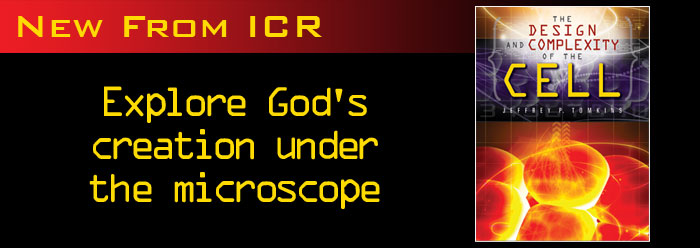
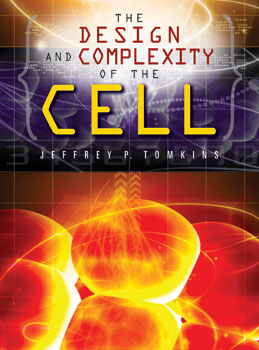
A NEW BOOK AT ICR-THE DESIGN AND COMPLEXITY OF THE CELL by Jeffrey P. Tomkins, Ph.D.


The Design and Complexity of the Cell

by Jeffrey P. Tomkins, Ph.D.


The majority of scientifically trained biologists and geneticists are taught that the apparent design that is observed in cells is the result of only random chemical and energy processes operating over eons of time. Such a belief system prompts their thinking to rest on purely natural logic, producing materialistic conclusions—and often ignoring or marginalizing the implications of careful engineering and design.

There are, however, multiple thousands of scientists who accept the Bible’s message that there is a Creator who planned the creation, designed the intricate engineering efficiencies into that creation, and then built the product: our planet and its wonderfully unique life and functions. That belief system not only fits empirically with what is observed (design, precise function, operational efficiencies, etc.), but provides insight that enables creation-based scientists to grasp the significance of the information more readily—without having to invent a supposed eons-long story for the development of what is actually observed.

Dr. Jeffrey Tomkins and his contributing colleagues have provided an excellent resource that documents and helps explain the intricate processes of cells, and gives keen insight for “clearly seeing” the obvious hand of the Creator in the “things that are made” (Romans 1:20).


Click here for more information about Dr. Jeffrey Tomkins and contributing authors.

Primary Author


Dr. Jeffrey Tomkins

Research Associate


Dr. Jeffrey Tomkins earned a master’s degree in Plant Science in 1990 from the University of Idaho, where he performed research in plant hormones. He received his Ph.D. in Genetics from Clemson University in 1996. While at Clemson, he worked as a research technician in a plant breeding/genetics program, with a research focus in the area of quantitative and physiological genetics in soybean. After receiving his Ph.D., he worked at a genomics institute and became a faculty member in the Department of Genetics and Biochemistry at Clemson. He had become a Christian as an undergraduate at Washington State University in 1982, with a goal to eventually work as a scientist and author in the creation science field. In 2009, Dr. Tomkins joined the Institute for Creation Research as Research Associate. He is the primary author of The Design and Complexity of the Cell.


 Contributing Authors


Dr. Nathaniel Jeanson

Deputy Director for Life Sciences

 Contribution:

  • Chapter 9: The Biology of Stem Cells

  • Chapter 10: Processes and Implications of Stem Cell Research

For more information about Dr. Jeanson, click here.


Dr. Brad Forlow


 Contribution:

  • Appendix 2: The Development of Pharmaceutical Therapeutics


Dr. Randy Guliuzza

National Representative


 Contribution:

  • Life’s Indispensable Microscopic Machines

  • Life-Giving Blood

  • Human Reproduction

  • Immune Systems, The Body’s Security Force

  • Darwinian Medicine: A Prescription for Failure

For more information about Dr. Guliuzza, click here.


Brian Thomas

Science Writer


 Contribution:

  • Have Scientists Created a Synthetic Cell?

  • Where Did Flesh-eating Bacteria Come From?

  • Brain’s Complexity “Is Beyond Anything Imagined”

  • The Mysteries of Stunning Soft Tissue Fossil Finds

For more information about Mr. Thomas, click here.


Frank Sherwin

Research Associate, Senior Lecturer, and Science Writer


 Contribution:

  • Cells: Sophisticated and God-Designed

For more information about Mr. Sherwin, click here.

Click here to read the Foreword by Dr. Henry Morris III.

Foreword

The functions within the cells of our bodies are foundational to our existence. Understanding these functions has made the environment and the processes of our lifestyles healthier, more enjoyable, and more productive. All of humanity has benefited from the life sciences and the scientists who have dedicated their considerable skills to uncovering the functions and processes of the multifaceted variety of cells.

Although scientists have discovered, documented, and developed wonderful insights about the complex information, precise sequential processes, and unique interwoven controls within cells, there is a huge chasm among scientists when they try to understand how these highly efficient processes got started in the first place.

The majority of scientifically trained biologists and geneticists are taught that the apparent design that is observed in cells is the result of only random chemical and energy processes operating over eons of time. Such a belief system prompts their thinking to rest on purely natural logic, producing materialistic conclusions— and often ignoring or marginalizing the implications of careful engineering and design.

There are, however, multiple thousands of scientists who accept the Bible’s message that there is a Creator who planned the creation, designed the intricate engineering efficiencies into that creation, and then built the product: our planet and its wonderfully unique life and functions. That belief system not only fits empirically with what is observed (design, precise function, operational efficiencies, etc.), but provides insight that enables creation-based scientists to grasp the significance of the information more readily—without having to invent a supposed eons-long story for the development of what is actually observed. Dr. Jeffrey Tomkins and his contributing colleagues have provided an excellent resource that will document and help explain the intricate processes of cells and give some keen insight for “clearly seeing” the obvious hand of the Creator in the “things that are made” (Romans 1:20).

Each chapter is written for technical accuracy. Most high school biology students will find the information similar to what is in their textbooks—but more carefully explained regarding the clear presence of design. Interspersed throughout the book are short articles that will provide specific examples of the cellular functions as they impact system operation. These examples will provide observable applications of how these marvelous processes insure that the purpose of each design is fulfilled.

At the end of each chapter is an information summary that will reinforce the science discussed and outline the design characteristics easily identified by the discoveries.

This book is designed as a scientific resource and ready reference, as well as an apologetic tool to use as a witness of the omnipotent and omniscient Creator and Savior. Our prayer at the Institute for Creation Research is that you will find both of these purposes fulfilled in your life.

Henry M. Morris III
Chief Executive Officer
Institute for Creation Research

Click here to see the Table of Contents.

Table of Contents

Page


Contributors
7
Foreword
9
Introduction
10
Chapter 1 Dogma and Science Surrounding Cell Origins 13


Abiogenesis 13


The Evolutionary Problem of the Cell 17


Have Scientists Created Artificial Life? 18


Summary 19


Application: Have Scientists Created a Synthetic Cell? 20
Chapter 2 A Basic Description of Cells and Cell Types 23


A Basic Definition of Cells 23


Two Basic Cell Types in Biology 25


Prokaryotic Cell Characteristics 27


Development of a Model System for Cell Biology 30


E. coli: The Prokaryotic Model for Evolution 30


The Role of Cells in Biological Creation 31


Summary 33


Application: Life’s Indispensable Microscopic Machines 34
Chapter 3 Eukaryotic Cells and Multicellularity 37


The Highly Engineered Eukaryotic Nucleus and Mitochondria 38


Mitochondria: The Evolutionary Model of Symbiosis Is Unsupported 40


Plant Cell Chloroplasts 41


Additional Eukaryotic Cell Characteristics 42


Summary 45


Application: Life-Giving Blood 46
Chapter 4 Genes and Proteins 49


DNA: The Cell’s Genetic Blueprint 49


Making a Protein 50


A Masterpiece of Design and Purpose 53


Summary 54


Application: Where Did Flesh-Eating Bacteria Come From? 55
Chapter 5 Cell Division and DNA Replication: How Life Is Engineered to Perpetuate 57


Cell Division: The Basic Biological Process Required for Life 57


Mitosis 59


Meiosis 60


Summary 64


Application: Brain’s Complexity “Is Beyond Anything Imagined” 65
Chapter 6 Cell Signaling: The Miracle of the Biological Network 67


Cell Surface Receptors 67


Neurons 69


Summary 71


Application: Human Reproduction 72
Chapter 7 The Cytoskeleton and the Extracellular Matrix: How Biology Achieves Shape, Form, and Movement 75


Actin Filaments and Microtubules 75


Junctions between Cells 77


The Extracellular Matrix 79


Summary 80


Application: The Mysteries of Stunning Soft Tissue Fossil Finds 81
Chapter 8 Cells in Creation, Sin, and Redemption 83


Plants 83


Photosynthesis and Respiration 84


Water, Air, and Land Creatures 85


Consequences of the Curse 86


Summary 87


Application: Immune Systems, the Body’s Security Force 88
Chapter 9 The Biology of Stem Cells 91


The Biology of Adult Stem Cells 91


Cellular Mechanisms of Self-Renewal and Differentiation 93


Molecular Mechanisms of Self-Renewal and Differentiation 94


The Biology of Embryonic Stem Cells 95


How Embryonic Stem Cells Work: Mechanisms of ESC Self-Renewal and Differentiation 95


The Origins of Human Cellular Diversity: The Fact of Creation and the Insufficiency of Evolution 96


Summary 97


Application: Darwinian Medicine: A Prescription for Failure 98
Chapter 10 Processes and Implications of Stem Cell Research 101


Reprogramming and Cloning 103


Stem Cells and Medicine: Cell Therapy 105


Stem Cell Ethics 106


Conclusion 109


Summary 110


Application: Cells: Sophisticated and God-Designed 111
Appendix 1 Biology and the Bible 113
Appendix 2 117


Therapeutic Intervention 117


Pharmaceutical Drug Discovery and Development 118


Pharmacological Inhibition 123


Conclusion 124
Glossary
125
Credits
128
Index
129

This beautiful, full-color book in hardcover is only $19.99 (plus shipping and handling). Click here to order your copy today!