skip to main |
skip to sidebar
Jewel of Christ’s Return

A
CAREFUL AND prayerful study of the New Testament will lead us to see
that Christ is central throughout its entirety. He is foreshadowed in
the Old Testament and particularly through the main and minor prophets,
the message is clear in pertaining to the Messiah to come; this was
Israel’s hope. How the Anointed One was to be manifest was where
many in Israel lost their way; many were looking for the physical
restoration of the twelve tribes. Even the twelve disciples were
anticipating Christ overthrowing tyranny by establishing a physical
reign. For Him to die at the hands of a brutal regime was absolute
madness and ran contrary to what they understood of the Scriptures. Only
after when Christ opened their eyes (after His resurrection) and
expounded the Scriptures, from Moses and all the Prophets, did they
rightly perceive the kingdom of God.
Are
we falling into the same error as Israel in foretelling and reading the
signs of how and where Christ will appear? The Biblical Christ is
seldom proclaimed in our westernised cultures and yet so many believers
get so hung-up over eschatology (Doctrine of the Last Things). How
are we to be balanced in regards to prophecy, pertaining to the future
and of Christ’s Second Coming, when we fail to perceive Who He really
is? If we are not enlightened (by the Holy Spirit) to Who the Son of God
is, how will we ever rightly prepare for His Second Coming?
Studying
eschatology is important and we are misguided to shelve (disregard) any
portion of Scripture through fear of confusion and controversy. It is,
however, understandable to some extent as to why some avoid this subject
(in so far as discussing it) for this very reason, but that doesn’t
justify ignorance in these matters; we are to grow up into Christ in all
things.
The
other aspect is to be obsessed with prophecy on end-time
interpretations to the point where we are only concerned with the
phenomena of things coming to fruition. Satan
will drive us to fanaticism and have us expend all our energies on end
time doctrine – or any other doctrine – so long as Christ is not
central. It is the subtlety that is the deception where one is
driven to excess. We know that there are numerous passages in the
gospels and epistles that pertain to Christ’s Second Advent, but their main and emphatic principle is that we may know the Son of God and have life in and through Him.
Was
it not Paul’s calling and desire to make Christ known, crucified and
resurrected? Was it not the greatest Apostle’s office to proclaim Him: “Him we proclaim, warning everyone and teaching everyone with all wisdom, that we may present everyone mature in Christ” (Colossians 1:28)? Was it not Paul who said to the church at Galatia, “…my little children, for whom I am in the anguish of childbirth until Christ be formed in you!” (Galatians 4:19)?
When end time doctrine presides over and above our looking to Christ, we are actually straying into grievous error. Observing animosity on current public forums over how Christ will come and establish His kingdom
(whether or not you adhere to Dispensationalism or Covenant Theology;
A, Pre or Post Millennialism; A, pre, mid or post rapture) is disgracefully divisive and grieving to the Spirit of God.
If the Apostle Paul (or any other Apostle for that matter) were to be
among us today, he would address such people in the same manner as the
‘Christians’ at Corinth who were by nature carnal. What other fruit,
besides arrogance and pride, does anyone get by insisting that their
view is right and everyone else’s is unintelligible or stupid?
Whatever
hermeneutics (science of interpretation) we may adopt in understanding
the Last Times, do we give people a sense of panic, fear and frustration
or do we encourage and build-up others in
the most holy Faith by having them look to Christ, to trust and rely on
Him with all their hearts? In all
our discussions of the end times, do we magnify Christ and strengthen
the hope of other believers? Do we exhort others to be ready for
Christ’s appearing? Are we living in the light of His coming?
The Apostles, in light of this subject, exhorted the Church to walk in holiness and as John wrote, “…everyone who thus hopes in Him [expecting Christ’s appearing] purifies himself as He is pure” (1 John 3:3).
I don’t see Christ being formed or people walking in holiness when
believers are bitterly falling out with one another over the manner in
which or what season and year Christ will come back. We will all find
out exactly when He does actually appear in all His glory and
majesty. Just as with the two disciples on the road to Emmaus who were
blind and ignorant to the Truth, so it
shall be with many of us when we see Him for Who He is; our eyes will be
opened and all our views will be infinitely eclipsed with His
unimaginable blazing-grandeur.
How
or what is going to materialise – whether the millennial kingdom is
through the entire Church age or a literal one-thousand year reign on
earth, with all its benefits, etc, etc – it is going to be nothing
compared to the beauty and majesty of God made visible to the eyes of
everyone. How so many harp on all the wonderful things in the millennial
reign, while, unbeknown, Christ takes second place in their conversation (this is where Satan’s misleading comes in). When John, on the Island of Patmos, saw Christ, he fell down as though dead; that was the greatest of all revelation and so it should be to anyone of us. Christ
is central and He is to be central in all our worship and living. In
all the visions of Isaiah and Ezekiel, the vision of God was too
overwhelmingly superior to put into perfect description; human
comprehension was utterly exhausted and dumbfounded.
What
aspects of the coming glory do we look forward to most? My friends, I
may be narrow-minded, but I don’t care if I see nothing else but God in all His glory for all ages of eternity.
God forgive us for thinking that we shall not eternally gaze on Him and
to not want for something else. Clothed in our right minds, we ought to
say with Charles Wesley that we shall be, “Lost in wonder, love and praise.”
I think it was Fanny Crosby (the famous blind hymn author) who said, in
her longing for heaven, that the first thing she looked forward to was
not the wonder of gaining her sight, but rather to gaze upon the beauty of Jesus. When I consider that, earth and everything of it just melts away.
I
have known of great friendships dissolving due to dividing on
non-fundamental doctrines. I personally know what it’s like to have
broken communication (not on my part) with others due to such
differences, which is saddening because I dearly miss their fellowship.
If we are in unity on the fundamental and primary doctrines (and one of
them is that Christ is soon returning), we have no justifiable reason to
exclude anyone from fellowship or to break friendship over secondary
issues. There are many godly leaders who, while I may disagree with
their eschatological views, will continue to respect and hold in high esteem due to their Christ-centred preaching.
God is reiterating to the Church the same words He spoke to Peter, James and John (on the Mount of Transfiguration) “This is My beloved Son, with Whom I am well pleased; listen to Him” (Matthew 17:5). God
speaks through His Son; we have the Scriptures – the final word that is
abundantly sufficient for the entire Church age. Everything is embodied
in Christ; it is in Him that ALL the promises of God are contained. He
is the express Image of God and in Him all the godhead dwells. “Long
ago, at many times and in many ways, God spoke to our fathers by the
prophets, but in these last days He has spoken to us by His Son, Whom He
appointed the heir of all things through Whom He also created the
world. He is the radiance of His glory and the exact imprint of His
nature, and He upholds the universe by the word of His power” (Hebrews 1:1-3).
All the phenomena, signs and wonders that we may witness are nothing compared to the majesty of Jesus Christ; He is greater than any foretelling or any inauguration of a kingdom.
It was David who longed to behold the beauty of God in the sanctuary –
not the kingdom nor apparels or any other instrument in the tabernacle;
they were purely to aid one’s worship to focus on the God who rescued
Israel out of bondage – the God Who made heaven and earth. To behold God
is the essence of all things. Moses’ hearts desire was to see the glory of God; everything else was nothing to be compared. Even Christ, when addressing the Father on behalf of His disciples and others who were to believe, said, “to know You is eternal life.”
To know God Himself – is that our one aim and ambition in life? Do we
count everything rubbish in comparison to knowing Christ? Do we??
Are
we longing to see the King of kings and Lord of lords robed in majesty –
His omnipotence unveiled before the eyes of all humanity – incomparably
above all other phenomenal aspects? Do we long to know a sin-free
glorified resurrection to where we can look upon Him and live and so
worship Him perfectly?
It is Christ – the Alpha and the Omega – it is God
our souls should yearn to behold. It shall not be the back of God (as
with Moses) we shall see while He mercifully veils our eyes with His
hand lest we should die; we shall see Him as He is in all His awesome glory and live. Everything else will be but shadows when we see His face.
Do we long for it, do we confidently anticipate it and are we prayerfully preparing for it?
May God restore this missing jewel in the Church!
Reposted from Shade of the Moriah Tree Aug 30


What is the Pretribulation Rapture?
“For the Lord himself shall
descend from heaven with a shout, with the voice of the archangel, and
with the trump of God: and the dead in Christ shall rise first: Then we
which are alive and remain shall be caught up together with them in the
clouds, to meet the Lord in the air: and so shall we ever be with the
Lord. Wherefore comfort one another with these words.” (1 Thess,
4:16-18).
“Behold, I shew you a mystery;
We shall not all sleep, but we shall all be changed, In a moment, in the
twinkling of an eye, at the last trump: for the trumpet shall sound,
and the dead shall be raised incorruptible, and we shall be changed. For
this corruptible must put on incorruption, and this mortal [must] put
on immortality” (1 Cor. 15:51-53).
The timing of the rapture is
not known. From the Word of God and from sound reasoning–something Jesus
used quite frequently–I hope to prove the reality of the pretribulation
rapture.
The word “rapture” comes from Paul’s “caught up” remark in verse 17. The words “caught up” are translated from the Greek word harpazo, which means “to carry off,” “snatch up,” or “grasp hastily.” The translation from harpazo to “rapture” involved two steps: first, harpazo became the Latin word raptus; second, raptus became the English word “rapture.”

Scriptural Evidence for the Pretribulation Rapture
The Unknown Hour
When we search the Scriptures and
read the passages describing the Lord Jesus’ return, we find verses that
tell us we won’t know the day and hour of that event. Matthew 25:13
says Jesus will return at an unknown time, while Revelation 12:6
indicates that the Jews will have to wait on the Lord 1,260 days,
starting when the Antichrist stands in the Temple of God and declares
himself to be God (2 Thes 2:4). This event will take place at the
mid-point of the seven-year tribulation (Dan 9:27). Note that some
people only see a three-and-a-half-year tribulation. In a way, they are
correct because the first half of the tribulation will be relatively
peaceful compared to the second half. Nonetheless, peaceful or not,
there still remains a seven-year period called the tribulation. When the
Jews flee into the wilderness, they know that all they have to do is
wait out those 1,260 days (Mat 24:16). There is no way to apply the
phrase “neither the day nor the hour” to this situation. The only way
for these two viewpoints to be true is to separate the two distinct
events transpiring here: 1) the rapture of the Church, which comes
before the tribulation; and 2) the return of Jesus to the earth, which
takes place roughly seven years later.
The Marriage Supper of the Lamb
In Luke 12:36, the Word states
that when Christ returns, He will be returning from a wedding. In
Revelation 19:7-8, we read about the marriage itself. The marriage
supper takes place before the marriage. According to Jewish custom, the
marriage contract, which often includes a dowry, is drawn up first. The
contract parallels the act of faith we use when we trust Jesus to be our
Savior. The dowry is His life, which was used to purchase us. When it’s
time for the wedding, the groom goes to the bride’s house unannounced.
She comes out to meet him, and then he takes her to his father’s house.
This precisely correlates with the events according to the pre-trib
scenario. Jesus, the Groom, comes down from heaven and calls up the
Church, His Bride. After meeting in the air, He and His Bride return to
His Father’s house, heaven. The marriage supper itself will take place
there, while down here on earth the final events of the tribulation will
be playing out. After the marriage supper of Jewish tradition, the
bride and groom are presented to the world as man and wife. This
corresponds to the time when Jesus returns to earth accompanied by an
army “clothed in fine linen, white and clean” (Rev 19:14).
What They Didn’t Teach You in History Class
Many groups try to discredit the
pre-trib rapture by saying most of the end-time events in the Bible have
already taken place. A group of people called preterists claims that
the Book of Revelation was mostly fulfilled by 70 AD. If the events
described in the Book of Revelation took place in the past, I’m at a
loss to explain some of the current situations I see around us: the
rebirth of Israel, the reunification of Europe, the number of global
wars that have occurred, and the development of nuclear weapons. During
history class, I must have slept through the part where the teacher
talked about the time when a third of the trees were burned up,
100-pound hailstones fell from the sky, and the sea turned into blood
(Rev 8:7-8, 16:21). I think several people would have to question their
opposition to the pre-trib rapture doctrine if they knew that the
evidence provided to them was based on the understanding that most
tribulation prophecies have already occurred.
The People of the Millennium
If Christ were to come back after
the tribulation, rapture all the saints, and slay all the ungodly, who
would be left to populate the earth during the millennium? Only the
pre-trib viewpoint can account for this post-trib problem. The Church is
raptured before the tribulation, a vast number of souls are saved
during this seven-year time frame, and those who make it through the
tribulation go into the millennium while the unsaved are cast into hell.
The Saint U-Turn
In the pre-trib scenario, after we
rise to meet the Lord in the air, we will go to heaven and abide there
seven years. At the end of that period, Christ will come down to earth,
defeat the Antichrist, and cleanse the temple. In a post-trib rapture,
we would rise in the air to meet the Lord, then do a 180-degree U-turn
and come back down to earth. Revelation 1:7 states that Christ will
appear out of the clouds and come down to earth. Zechariah 14:4 says
that His feet will stand on the Mount of Olives. If He’s already headed
our way, why would we need to be caught up to meet Him?
“Come Up Hither”
Many pre-trib writers cite
Revelation 4:1, which says, “come up hither,” as a prophetic reference
to the rapture of the Church, leaving Revelation chapters 1 through 3 as
a description of the Church Age. After the shout to “come up hither,”
the Church is not mentioned in Scripture at all. The attention of
Scripture switches from the Church to the Jews living in Israel.
Armies in Fine Linen
When Jesus returns (Rev. 19:18),
an army follows Him. The army’s members are riding on white horses, and
they are clothed in fine linen that is white and clean. In Revelation
19:8, we are told that the fine linen is the righteousness of the
saints. If the saints of God are returning with Christ to wage war on
the Antichrist, then it is not possible to have a post-trib rapture
without us running into ourselves as we are coming and going.
The Time of Jacob’s Trouble
In several passages, the Bible
refers to the tribulation as a time of trouble for the Jews. The phrase
“Jacob’s trouble” pertains to the descendants of Jacob. Jeremiah 30:7
says that this time of trouble will come just before the Lord returns to
save His people. The final week of Daniel’s 70th week is yet to take
place. An angel told Daniel that, “70 weeks are determined unto thy
people” (Dan 9:24). Scripture never mentions that the tribulation is
meant to be a time of testing for Christians. However, some
post-tribbers try to claim that they are the ones being tested during
the tribulation. To make this so, they need to spiritualize the 144,000
Jewish believers in Revelation 7:2-8 who receive God’s protective seal.
Placing the Church dispensation into the same time frame as the
seven-year Jewish dispensation, as the post-tribbers do, raises one good
question: Can two dispensations transpire at the same time? In the
past, God has only dealt with one at a time. Having both present during
the tribulation would have to be an exception.
“He” That is Taken Out of the Way
Before the Antichrist can be
revealed, Paul said a certain “He” must be taken out of the way.
According to 2 Thessalonians 2:7, the “He” that must be removed is
widely thought to be the Holy Spirit. It has been promised that the Holy
Spirit would never leave the Church, and without the working of the
Holy Spirit remaining on earth, no one could be saved during the
tribulation. The removal of the Church, which is indwelt by the Holy
Ghost, would seem the best explanation for this dilemma. The working of
the Holy Spirit could go on during the tribulation, but His influence
would be diminished because of the missing Church.
War or Rapture
(Rev 19:19-21) When Jesus returns
at the end of the tribulation, He will be coming for battle. For those
who believe in a post-trib rapture, it would be strange to meet your
Lord and Savior just as He’s rushing into battle. The idea that war and
rapture could occur together is difficult to imagine, especially since
they transpire at the same moment.
The Five Foolish Virgins
The wedding story that Jesus gave
in Matthew 25:2-13, I believe, is a parable of the rapture of the
Church. It explains how some will not be ready. Jesus clearly states
that a group of people will miss out on an event, and will cry out to
God to let them into the place where He resides, heaven. Although some
try to put this parable in a post-trib context, it doesn’t fit very
well. The ones left behind in a post-trib rapture will not need to seek
the Lord because they’ll immediately be confronted by Him and His army
of angels.
God Hath Not Appointed Us to Wrath
In 1 Thessalonians 5:9, Paul
assures us that God has not appointed His people to wrath. This wrath is
plainly God’s anger that will be poured out during the tribulation.
Pre-trib believers interpret this as meaning that Christians will be
removed from the earth. Post-trib believers tell a different story. They
describe this as meaning that God will protect Christians during the
tribulation and pour this wrath out on the unbelievers only. This idea
runs against the statement made in Revelation 13:7, in which the
Antichrist is given power to make war with the saints and to overcome
them. A post-trib view would make God’s promise of protection from wrath
into a lie. In years past, it was possible to think of being protected
from the guns and swords of that day. Today, when any major war would
involve nuclear and chemical weapons, it’s impossible to expect that
same kind of protection. When Nagasaki, Japan was bombed during World
War II, the bomb exploded over a Catholic church. Everyone who was in
the center of the explosion died–both Christians and non-Christians. The
only way to validly interpret God’s promise of protection from wrath is
by viewing 1 Thessalonians 5:9 as the bodily removal of the Church from
this world.
The Salt of the Earth
Jesus said, “Ye are the salt of
the earth” (Matthew 5:13). When the believers are supenly removed, the
earth will be plunged into spiritual darkness. When this happens, the
Antichrist will then be free to control the world.
God Takes an Inventory
In Revelation 7:3, an angel
descends to earth and seals the servants of God. Two bits of information
about this sealing highly disclaim a post-trib viewpoint. The first
item is the number of people sealed: 144,000. The second one is that all
those who are sealed are from the 12 tribes of Israel. For the events
in Revelation 7:3-8 to be true in a post-trib interpretation, either the
Church has turned against God or God has turned against the Church. A
post-tribber could write a thousand-word commentary about why the Church
doesn’t need to be sealed. Instead of trying to argue about why the
Church is not mentioned or sealed, a pre-trib proponent could just say,
“We’re already in heaven.”
Noah and Lot as Examples
The tribulation period is compared
to the times of Noah and Lot by Jesus in Luke 17:28. Most people argue
over whether the time frame Jesus was talking about in that passage was
pre-trib or post-trib. In doing so, they miss an important point. The
two circumstances that the Noah and Lot situations have in common are
the removal of the righteous and the judgment of the unbelievers. From
these two accounts, we see that God prefers to remove His own when
danger is involved.
Common-Sense Reasons for Believing in the Pretribulation Rapture
The World Test
One way to check the soundness of a
doctrine is to see how the world reacts to it. One company put out a
questionnaire that was used to screen prospective employees. One of the
questions was, “Do you believe in the rapture?” If you answered “yes,”
your chances of getting hired would not be good. Some internet sites do
not allow the topics of Rapture or Second Coming. They do allow topics
such as sex, gays, and drugs. The only time the news media mentions the
rapture is when someone sets a date and is proven to be wrong.
That Old-Time Religion
It used to be a rule of thumb that
when one was visiting a church or listening to a preacher, one could
assume the preacher believed in repentance, prayer, and the baptism of
the Holy Ghost if he taught the rapture doctrine. It was also true that
the churches on fire for God worshipped out of storefronts. Today, many
of those storefront churches have moved into marble palaces and have
strayed from their principal doctrines.
Birds of a Feather Flock Together
Whenever I look at all the groups
that teach false doctrine and are highly focused on end-time events, I
cannot find any that support the rapture theory. Some organizations, the
Jehovah’s Witnesses, for example, teach a false gospel and are heavily
into Bible prophecy. Why, then, don’t Jehovah’s Witnesses teach a false
doctrine that would be right up their alley? Could it be that the
demonic forces that influence these groups know something that
Christians opposed to the rapture don’t know? The list of prophetically
minded cults that reject the idea of a rapture goes on and on. Here are
some more: the Mormons, the Worldwide Church of God and the Moonies, as
well as leaders like Jim Jones and David Koresh.
The Church Would Rebuke the Antichrist
If the Antichrist came to power
with the Church still here, I do not see how he could operate. When
Hitler was fighting to take over England, a number of Christians were
praying for victory. Hitler made mistake after mistake, and England
outperformed its enemy at every stage of the conflict. It is difficult
to measure the impact of intercessory prayer in physical warfare. Little
is known of how great a role praying saints played in the defeat of
Nazi Germany. If the Church were to reside on earth during the
tribulation, I am sure she would give the Antichrist fits. In Revelation
11:3, the two witnesses alone give the Antichrist enough headaches.
Millions of Christians who know their Bibles well would recognize the
man of sin and pray fire down on his head. The post-trib view would have
to plan on the Church just rolling over and playing dead the whole
seven years.
We should all remember one
thing: Knowing the Antichrist’s mother’s maiden name isn’t the primary
goal. Knowing Jesus Christ as your personal Savior and having your name
written in the Lamb’s Book of Life should be your number-one priority.
The jailer asked Paul, “What must I do to be saved?” The answer was,
“Believe on the Lord Jesus Christ, and thou shalt be saved” (Acts
16:30-31).
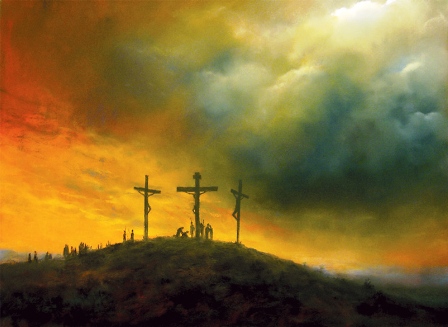
HE IS RISEN
There is only one essential doctrine which is absolutely necessary for one to believe in order to be born again:
that God raised Jesus, the Lord, from the dead! The Apostle Paul
wrote, ”That if thou shalt confess with thy mouth the Lord Jesus, and
shalt believe in thine heart that God hath raised Him from the dead,
thou shalt be saved” (Rom. 10:9).
Nowhere in Scripture does it
say that we are required to believe in Him as Creator of the Universe,
as virgin born, as crucified for the sins of the world, or as coming
again in order to be saved. Of course, all those things are true (Jn. 1:1-3; Col. 1:16; Isa. 7:14; Mt. 1:23; Rom. 3:25; 1 Jn. 2:2; Acts 1:11; Rev. 19:11-16), but it is our faith that God, the Father of Jesus Christ, resurrected His only begotten Son, that saves us. Paul also preached, “And though
they found no cause of death in Him, yet desired they Pilate that He
should be slain. And when they had fulfilled all that was written of
Him, they took Him down from the tree, and laid Him in a sepulchre. But
God raised Him from the dead” (Acts 13:28-30).
Paul also preached, “And though
they found no cause of death in Him, yet desired they Pilate that He
should be slain. And when they had fulfilled all that was written of
Him, they took Him down from the tree, and laid Him in a sepulchre. But
God raised Him from the dead” (Acts 13:28-30).  The Apostle Peter wrote, “But
with the precious blood of Christ, as of a lamb without blemish and
without spot: Who verily was foreordained before the foundation of the
world, but was manifest in these last times for you, Who by Him do
believe in God, that raised Him up from the dead, and gave Him glory;
that your faith and hope might be in God” (1 Pet. 1:19-21).
The Apostle Peter wrote, “But
with the precious blood of Christ, as of a lamb without blemish and
without spot: Who verily was foreordained before the foundation of the
world, but was manifest in these last times for you, Who by Him do
believe in God, that raised Him up from the dead, and gave Him glory;
that your faith and hope might be in God” (1 Pet. 1:19-21).
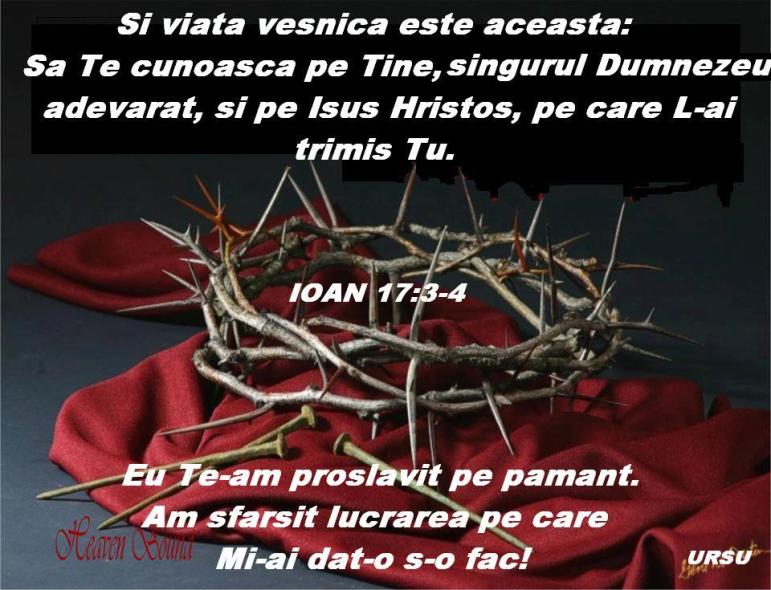 Peter also preached: “Him,
being delivered by the determinate counsel and foreknowledge of God, ye
have taken, and by wicked hands have crucified and slain: Whom God
hath raised up, having loosed the pains of death: because it was not
possible that he should be holden of it” (Acts 2:23-24 – see also Acts
3:14-15; 4:10).
Peter also preached: “Him,
being delivered by the determinate counsel and foreknowledge of God, ye
have taken, and by wicked hands have crucified and slain: Whom God
hath raised up, having loosed the pains of death: because it was not
possible that he should be holden of it” (Acts 2:23-24 – see also Acts
3:14-15; 4:10). My question to you on this
day in which we celebrate the Resurrection of the Lord Jesus is, Do you
believe that God, the Father of Jesus Christ, raised Him from the dead,
to be Lord to all who will put their trust in Him? Has your faith in
Him, as your Lord, caused you to obey His Word, to witness to others
about Him, and to look forward to His return? If
not, let today be the first day of your eternal life by accepting Jesus
as your Lord and Savior! It may be your last opportunity to do so!
My question to you on this
day in which we celebrate the Resurrection of the Lord Jesus is, Do you
believe that God, the Father of Jesus Christ, raised Him from the dead,
to be Lord to all who will put their trust in Him? Has your faith in
Him, as your Lord, caused you to obey His Word, to witness to others
about Him, and to look forward to His return? If
not, let today be the first day of your eternal life by accepting Jesus
as your Lord and Savior! It may be your last opportunity to do so!
 The angel said unto the women at the tomb, “He is not here, He is risen as He said.”
 http://skipslighthouse.blogspot.com/2013/03/he-is-risen_31.html
DOCTRINA FALSĂ ESTE MAI REA DECÂT DIVIZIUNEA
J.C. Ryle ~

Dar, când a venit Chifa în Antiohia, i-am stat împotrivă în faţă, căci era de osândit.
În adevăr, înainte de venirea
unora de la Iacov, el mânca împreună cu Neamurile; dar când au venit ei,
s-a ferit şi a stat deoparte, de teama celor tăiaţi împrejur.
Împreună cu el au început să se prefacă şi ceilalţi Iudei, aşa că până şi Barnaba a fost prins în laţul făţărniciei lor.
Când i-am văzut eu că nu umblă
drept după adevărul Evangheliei, am spus lui Chifa în faţa tuturor:
“Dacă tu, care eşti Iudeu, trăieşti ca Neamurile, şi nu ca Iudeii, cum
sileşti pe Neamuri să trăiască în felul Iudeilor?”
Noi suntem Iudei din fire, iar nu păcătoşi dintre Neamuri.
Totuşi, fiindcă ştim că omul nu
este socotit neprihănit, prin faptele Legii, ci numai prin credinţa în
Isus Hristos, am crezut şi noi în Hristos Isus, ca să fim socotiţi
neprihăniţi prin credinţa în Hristos, iar nu prin faptele Legii, pentru
că nimeni nu va fi socotit neprihănit prin faptele Legii. Galateni 2:11-16
În al doilea rând, “Păstrarea adevărului lui Hristos în biserica Sa este chiar mai importantă decât păstrarea relaţiei de pace.”
Să învăţăm acum a doua lecţie de la cei
din Antiohia. Această lecţie este spune că “Păstrarea adevărului
Scripturii în Biserică este mai importantă decât însăşi păstrarea
păcii.”
Presupun că nimeni n-a cunoscut mai
bine decât apostolul Pavel valoarea păcii şi unităţii. El era cel care a
scris Corintenilor despre dragoste. El era apostolul care a zis, –un
singur Domn, o singură credinţă, un singur botez.”
“Trăiţi în
armonie unii cu alţii, trăiţi în pace între voi; robul Domnului nu
trebuie să se certe; este un singur trup, un singur Duh–după cum şi voi
aţi fost chemaţi la o singură nădejde a chemării voastre
El a fost apostolul care a spus, “M-am
făcut tuturor totul, ca, oricum, să mântuiesc pe unii din ei” (Romani
12:16; 1 Tesaloniceni 5:13; Filipeni 3:16; Efeseni 4:5; 1 Corinteni
9:22). Şi totuşi, iată-l cum se comportă aici! I se împotriveşte făţiş
lui Petru. Îl mustră public. Îşi asumă riscul tuturor consecinţelor care
puteau să urmeze. Riscă să-i provoace pe duşmanii bisericii din
Antiohia să aibă ce comenta. Şi mai mult decât atât, scrie acest
lucru, să rămână de amintire, spre a nu fi niciodată uitat, astfel încât
oridecâte ori se va predica Evanghelia în toată lumea, acest reproş
public făcut unui apostol care a greşit să poată fi cunoscut şi citit de
toţi.
De ce a făcut acest lucru? Fiindcă s-a
temut de doctrina falsă; fiindcă ştia că puţin aluat dospeşte toată
plămădeala, fiindcă dorea să ne înveţe să ne luptăm cu râvnă pentru
adevăr, şi să ne temem mai mult de pierderea adevărului decât de
pierderea relaţiei de pace.
Am face bine să luăm aminte la exemplul
lui Pavel în aceste zile. Mulţi ar accepta fără comentarii în religia
lor orice aspect, numai să fie cu pace. Au o teamă morbidă de ceea ce ei
numesc “controversă.” Sunt cuprinşi cu totul de o teamă morbidă de ceea
ce categorisesc, în mod foarte vag, drept “spirit partinic,” deşi nu
definesc niciodată cu claritate ce înţeleg prin spirit partinic. Sunt
copleşiţi de dorinţa morbidă de păstrare a păcii şi de a face toate
lucrurile să fie netede, clare şi plăcute, chiar cu preţul renunţării la
adevăr. Atâta vreme cât li se asigură pacea, liniştea, lipsa
conflictului şi rânduiala stabilită, sunt în stare să renunţe de bună
voie la toate celelalte. Cred că aceştia ar fi considerat, alături de
Ahab, că Ilie tulbură pe Israel, şi i-ar fi ajutat pe prinţii din Iuda
când l-au aruncat pe Ieremia în temniţă pentru a-i închide gura. Nu mă
îndoiesc că mulţi din aceşti oameni despre care vorbesc, ar fi
considerat că Pavel s-a comportat foarte inprudent la Antiohia, şi că a
mers prea departe!
Cred că această atitudine este în
întregime greşită. Nu avem dreptul să aşteptăm ca altceva să facă bine
sufletelor oamenilor decât Evanghelia curată a lui Cristos, neamestecată
şi neschimbată; aceeaşi Evanghelie care a fost predicată de către
apostoli. Cred că pentru a menţine în biserică acest adevăr curat al
Evangheliei, oamenii ar trebui să fie gata să facă orice sacrificiu,
chiar să pună în pericol pacea, sau să rişte să provoace neînţelegeri
sau divizare. N-ar trebui să tolereze doctrina falsă mai mult decât
tolerează păcatul. Ar trebui să se împotrivească la orice adăugire sau
la orice ştirbire a mesajului simplu al Evangheliei lui Cristos.
De dragul adevărului, Domnul nostru
Isus Cristos i-a denunţat chiar şi pe Fariseii care stăteau pe scaunul
lui Moise, şi care erau învăţătorii puşi şi autorizaţi să înveţe
poporul. “Vai
de voi, cărturari şi Farisei făţarnici!” le spune El de opt ori în
capitolul 23 din Matei. Şi oare cine ar îndrăzni să se gândească că
Domnul a greşit când spunea astfel?
De dragul adevărului, Pavel
s-a împotrivit lui Petru şi l-a acuzat, măcar că erau fraţi. Cum să le
mai fie de folos unitatea când puritatea doctrinei dispăruse? Şi cine ar
îndrăzni să spună că Pavel a greşit?
De dragul adevărului, Atanasie
s-a poziţionat împotriva tuturor pentru a menţine doctrina curată a
dinităţii lui Cristos, şi a purtat o controversă cu majoritatea
covârşitoare a bisericii din vremea lui. Şi cine ar îndrăzni oare să
spună că a greşit?
De dragul adevărului, Luther
a rupt unitatea bisericii în care a s-a născut, l-a denunţat pe papa cu
toate faptele lui, şi a pus temelia unei noi învăţături. Şi cine ar
îndrăzni oare să spună că Luther a greşit?
De dragul adevărului, Cranmer,
Ridley, and Latimer, reformatorii englezi, i-au sfătuit pe Henry al
VIII-lea şi Edward al VI-lea să se separe de Roma, şi să-şi asume
consecinţele divizării. Şi cine ar îndrăzni să spună că au greşit?
De dragul adevărului, Whitefield and
Wesley, acum o sută de ani, au denunţat predicarea morală stearpă a
clericilor din vremea lor, şi au pornit pe drumuri şi cărărui pentru a
salva suflete, ştiind bine că vor fi excluşi de la comuniunea bisericii
lor. Şi cine ar îndrăzni oare să spună că au greşit?
Da, pacea fără adevăr este o pace
falsă; este chiar pacea diavolului. Unitatea fără Evanghelie este o
unitate fără valoare; este chiar unitatea iadului. Să nu ne lăsăm
prinşi în cursa celor care vorbesc frumos despre ea. Să ne amintim
cuvintele Domnului nostru Isus Cristos, “Să nu credeţi că am venit
s-aduc pacea pe pământ; n-am venit să aduc pacea, ci sabia” (Matei
10:34). Să ne amintim felul în care este lăudată una din bisericile din Apocalipsa,
“Ştiu faptele tale, osteneala ta şi răbdarea ta, şi că nu poţi suferi
pe cei răi; că ai pus la încercare pe cei ce zic că sunt apostoli şi nu
sunt, şi i-ai găsit mincinoşi (Apocalipsa 2:2). Să ne amintim reproşul pe care-l aduce alteia,
“Tu o tolerezi pe Izabela, femeia aceea care se zice proorociţă” (v. Apocalipsa 2:20).
Să
nu ne facem niciodată vinovaţi de sacrificarea vreunei părţi a
adevărului pe altarul păcii. Mai degrabă, să fim ca evreii care, atunci
când identificau vreun manuscris care cuprindea o copie a Scripturilor
Vechiului Testament care avea o greşeală la o singură literă, puneau pe
foc întregul manuscris, mai degrabă decât să rişte să piardă vreo iotă
sau vreo frântură de slovă din Cuvântul lui Dumnezeu. Să nu fim
mulţumiţi cu nimic mai puţin decât întreaga Evanghelie a lui Cristos.
În ce fel trebuie noi să folosim în mod
practic principiile generale pe care le-am arătat? Voi da cititorilor
mei un sfat simplu. Cred că este un sfat vrednic să i se dea atenţie.
Atenţionez deci pe orice om care-şi
iubeşte sufletul să fie selectiv ce predici ascultă de obicei, în ce loc
se duce de obicei să se închine. Cel care se aşează conştient sub
umbrela vreunei biserici sau organizaţii care este în mod clar
nesănătoasă, este foarte neînţelept. Eu niciodată n-aş ezita să spun ce
gândesc în acest aspect. Ştiu bine că mulţi consideră şocant ca o
persoană să-şi părăsească biserica locală. Eu nu pot vedea prin ochii
acestor oameni. Eu fac o
distincţie largă între învăţătura care este cu lipsuri şi învăţătura
care este complet falsă; între învăţătura cu posibile erori de
interpretare şi cea care este clar nebiblică. Însă cred cu tărie că,
dacă într-o biserică locală se propovăduieşte în mod obişnuit o doctrină
falsă, credinciosul care-şi iubeşte sufletul are perfectă dreptate să
nu se mai ducă la acea biserică. A asculta predici nebiblice de
cincizeci şi două de ori pe an este un lucru serios. Este o alimentare
continuă a minţii cu doze mici de otravă. Cred că este aproape imposibil
pentru cineva să se supună singur la aşa ceva, şi să nu fie afectat.
Văd că ni se spune clar în Noul Testament să “cercetăm toate lucrurile,” şi să “păstrăm ce este bun” (1 Tesaloniceni 5:21). Văd în cartea Proverbelor că ni se porunceşte, “Încetează, fiule, să mai asculţi învăţătura, dacă ea te depărtează de învăţăturile înţelepte” (Proverbe 19:27) Dacă aceste cuvinte nu îndreptăţesc pe cineva să se oprească în a se mai închina într-o anumită biserică în care se predică o doctrină falsă, nu ştiu ce alte cuvinte l-ar putea convinge.
-
Îţi dă cineva de înţeles că frecventarea bisericii sau denominaţiei tale este absolut necesară pentru mântuire? Dacă da, ai mare grijă! Să aibă curajul să ne-o spună şi nouă.
-
Vrea
cineva să te facă să înţelegi că frecventarea unei anumite biserici sau
denominaţiuni mântuieşte sufletul cuiva, chiar dacă acesta moare
neconvertit şi în ignoranţă cu privire la Cristos? Dacă da, ai mare grijă! Să aibă curajul să ne-o spună şi nouă.
-
Vrea
cineva să-ţi spună că a merge la o anumită biserică sau denominaţie îl
învaţă pe om ceva despre Cristos, sau despre schimbarea inimii, sau
despre credinţă, sau despre pocăinţă, dacă aceste subiecte de-abia dacă
sunt pomenite în respectiva biserică, şi niciodată nu sunt explicate cum
se cuvine? Dacă da, ai mare grijă! Să aibă curajul să ne-o spună şi nouă.
-
Îţi
dă cineva de înţeles că omul care se pocăieşte, crede în Cristos,
trăieşte o viaţă nouă şi sfântă, îşi va pierde sufletul fiindcă şi-a
părăsit biserica şi a învăţat religia în altă parte? Dacă da, ai mare grijă! Să aibă curajul să ne-o spună şi nouă.
În ce mă priveşte, nu pot să sufăr
astfel de idei monstruoase şi extravagante. Nu văd nici o urmă de
temelie biblică în ele. Şi cred că cei ce ţin astfel de învăţături este
extrem de mic.
Există multe biserici în care
învăţătura religioasă este aproape nulă. Se cuvine oare ca membrii unor
astfel de biserici să stea liniştiţi, să fie mulţumiţi, şi să se bucure
de “pace”? Nicidecum. De ce? Fiindcă, la fel ca Pavel, ar trebui să prefere adevărul păcii.
Există multe biserici unde învăţătura
religioasă este doar o simplă moralitate. Doctrinele distinctive ale
creştinătăţii nu sunt niciodată proclamate în mod clar. Platon, Seneca
sau Confucius ar fi putut să propovăduiască aceleaşi învăţături. Se
cuvine oare ca membrii unor astfel de biserici să stea liniştiţi, să fie
mulţumiţi, şi să se bucure de “pace”? Nicidecum. De ce? Fiindcă, la fel ca Pavel, ar trebui să prefere adevărul păcii.
-
Folosesc oare un limbaj dur în această parte a subiectului meu? Ştiu că este aşa.
-
Umblu oare într-o zonă delicată? Ştiu că este aşa.
-
Atac oare subiecte care sunt în general lăsate în pace şi trecute sub tăcere? Ştiu că este aşa.
Spun ceea ce spun dintr-un simţ al datoriei faţă de biserica pe care o slujesc. Cred că situaţia din lume şi starea adunării cer să vorbim deschis. În multe biserici, sufletele pier în ignoranţă.
Membrii cinstiţi ai bisericii sunt dezgustaţi şi încurcaţi. Nu mai este
vreme de cuvinte delicate. Nu sunt ignorant de acele cuvinte magice, “ordine, diviziune, schismă, unitate, controversă,”
şi altele ca ele. Ştiu influenţa pe care aceste cuvinte par să o aibă
asupra anumitor oameni: le provoacă crampe abdominale sau îi face să
nu‑şi poată ridica glasul. Şi eu m-am gândit în linişte şi cu atenţie la
ele, şi despre fiecare vreau să vă spun ceva.
(a) Biserica denominaţională este un
lucru admirabil în teorie. Numai să fie bine administrat şi pus în
practică de lucrători cu adevărat spirituali, şi atunci va aduce
naţiunii întregi cea mai mare binecuvântare. Însă nu poţi să aştepţi
ataşament faţă de anumită biserică atunci când slujitorii ei sunt
ignoranţi în ce priveşte Biblia sau sunt iubitori de lume. În astfel de
cazuri n-ar fi de mirare ca oamenii să părăsească respectiva biserică,
şi să caute adevărul acolo unde poate fi găsit. Dacă
slujitorii bisericii respective nu predică Evanghelia şi nu trăiesc
Evanghelia, condiţiile în baza cărora pretind atenţia congregaţiei lor
sunt încălcate de ei înşişi, iar pretenţiile de a fi ascultaţi au ajuns
la capăt. Este absurd să te aştepţi de la capul unei familii să pună în
pericol sufletele copiilor săi, dar şi sufletul său, doar de dragul
“bisericii” sale. În Biblie nu se pomeneşte despre
biserici, nici catolice, nici ortodoxe, nici denominaţionale, şi astfel
nimeni nu are dreptul de a cere oamenilor să trăiască şi să moară în
ignoranţă, doar pentru ca la urmă să poată spune, “Eu toată viaţa nu mi-am schimbat biserica, m-am dus doar la una.”
(b) Diviziunile şi separările sunt foarte de condamnat în religie.
Ele slăbesc cauza adevăratei creştinătăţi. Ele dau vrăjmaşilor celor
buni ocazia să hulească, să blasfemieze. Dar înainte de a-i acuza pe
oameni pentru că fac asta, trebuie să avem grijă să vedem bine cine este
vinovatul. Doctrina falsă şi erezia sunt mai rele decât schisma.
Dacă oamenii se separă de învăţătura care este în mod clar falsă şi
nebiblică, ar trebui mai degrabă să-i lăudăm decât să-i condamnăm. În
astfel de cazuri separarea este o virtute, nu un păcat. Este uşor să
faci remarci dispreţuitoare despre cei pe care “îi gâdilă urechile,” şi “iubesc distracţia;”
însă nu este uşor să convingi un cititor simplu al Bibliei că este
datoria lui să se ducă să asculte în fiecare duminică o doctrină falsă,
când cu un pic de efort ar putea merge să asculte adevărul.
(c) Unitatea, liniştea şi rânduiala între cei ce se declară creştini sunt binecuvântări extraordinare.
Ele dau tărie, frumuseţe şi eficienţă cauzei lui Cristos. Dar chiar şi
aurul poate fi cumpărat prea scump. Unitatea obţinută prin sacrificarea
adevărului nu are valoare. Nu unitatea place lui Dumnezeu. Biserica Romei se laudă în gura mare cu o unitate care nu-şi merită numele. Această unitate obţinută prin
luarea Bibliei din mâinile oamenilor, prin trâmbiţarea unor păreri şi
judecăţi individuale, prin încurajarea ignoranţei, prin a interzice
oamenilor să gândească pentru ei înşişi şi să aibă păreri proprii.
Întocmai ca luptătorii exterminatori din vechime, Biserica Catolică a
Romei forţează o izolare şi o numeşte pace. Există destulă tăcere şi
linişte chiar şi în mormânt, însă nu este o linişte a sănătăţii, ci a
morţii. Profeţii falşi erau aceia care strigau “Pace,” când nu era pace.
(d) Controversa în religie este ceva detestabil.
Este destul că avem de luptat împotriva diavolului, împotrivă lumii şi a
cărnii sau firii noastre păcătoase, nu trebuie să mai avem lupte şi
datorită diferenţelor particulare din propria tabără. Însă există un
lucru care este mai grav decât controversa, şi anume tolerarea,
îngăduirea, permiterea doctrinei false, fără a ne împotrivi sau fără a
fi deranjaţi. Chiar controversa a câştigat bătălia Reformei protestante.
Dacă învăţăturile oamenilor de atunci erau corecte, este clar că n‑ar
fi fost nevoie de nici o Reformă! De dragul păcii, ar fi trebuit să
continuăm să ne închinăm Fecioarei şi să ne plecăm în faţa icoanelor şi
moaştelor până în ziua de astăzi! Hai să terminăm cu prostiile astea!
Există anumite perioade când controversa nu este doar o datorie, ci şi
un câştig. Mie daţi-mi mai bine tunetul cel puternic decât malaria cea mortală. Cea din urmă umblă în întuneric şi ne otrăveşte în tăcere, şi niciodată nu vom fi în siguranţă. Primul ne înspăimântă şi ne alarmează doar pentru puţină vreme. Dar apoi a trecut, şi împrospătează aerul. Avem o datorie biblică clară “să luptăm pentru credinţa care a fost dată sfinţilor o dată pentru totdeauna” (Iuda 1:3).
Sunt deplin conştient că lucrurile pe
care le-am spus sunt extrem de neplăcute pentru mulţi. Cred că mulţi se
mulţumeac cu o învăţătură care nu este adevărul întreg, şi îşi închipuie
că la urmă va fi “tot una.” Îmi pare rău pentru aceştia. Sunt
convins că nimic altceva în afară de adevărul întreg nu va putea, ca
regulă generală, să facă bine sufletelor. Ştiu că acei care de bună voie
se mulţumesc cu orice altceva decât adevărul întreg, vor descoperi în
cele din urmă că sufletul lor a avut mult de suferit. Există trei lucruri
cu care oamenii nu trebuie niciodată să se joace: puţină otravă, puţină învăţătură falsă, şi puţin păcat.
Sunt deplin conştient că atunci când
cineva exprimă opinii de felul celor pe care tocmai vi le-am prezentat,
vor exista mulţi care să zică, “Omul acesta nu mai este credincios
bisericii.” Ascult astfel de acuzaţii fără să mai mişte. Ziua judecăţii
va arăta cine au fost adevăraţii prieteni ai bisericii, şi cine nu. Eu
am văzut în ultimii treizeci şi doi de ani că, dacă un pastor/slujitor
duce o viaţă liniştită, îi lasă în pace pe cei neconvertiţi din lume şi
predică aşa încât să nu deranjeze pe nimeni, dar nici să nu zidească pe
nimeni, va fi catalogat de mulţi drept “un pastor/slujitor bun.”
Am mai
descoperit că dacă cineva studiază Scriptura, lucrează necontenit pentru
mântuirea sufletelor, aderă fără rezerve la doctrinele mari ale
Reformei, condamnă cu credincioşie învăţăturile nebiblice, şi predică cu
putere predici care caută să-i convingă pe oameni, va fi considerat
probabil un instigator şi unul care “tulbură pe Israel.” Dar, să spună
oamenii ce vor. Prietenii adevăraţi ai bisericii sunt acei care se
trudesc cel mai mult pentru păstrarea adevărului.
Am aşternut aceste rânduri în faţa cititorilor, invitându-i să le ia cu seriozitate în seamă. Îi provoc să nu uite niciodată că adevărul este mai important pentru biserică decât pacea.
Le cer să fie gata să ducă mai departe principiile enunţate, şi să
lupte cu toată puterea, dacă este cazul, pentru adevăr. Dacă vom face
aşa, înseamnă că am învăţat ceva de la cei din Antiohia.
- J.C. Ryle (1816-1900)
luată din: The Fallibility of Ministers.
Posted on Oct25

 http://ioan17.wordpress.com/2012/10/27/false-doctrine-is-worse-than-division
J.C. Ryle ~
When Peter came to Antioch,
I opposed him to his face, because he was clearly in the wrong. Before
certain men came from James, he used to eat with the Gentiles. But
when they arrived, he began to draw back and separate himself from the
Gentiles because he was afraid of those who belonged to the
circumcision group.
The other Jews joined him
in his hypocrisy, so that by their hypocrisy even Barnabas was led
astray. When I saw that they were not acting in line with the truth of
the gospel, I said to Peter in front of them all, “You are a Jew, yet
you live like a Gentile and not like a Jew. How is it, then, that you
force Gentiles to follow Jewish customs?”
We who are Jews by birth
and not “Gentile sinners” know that a man is not justified by observing
the law, but by faith in Jesus Christ. So we, too, have put our faith
in Christ Jesus that we may be justified by faith in Christ and not
by observing the law, because by observing the law no one will be
justified. Galatians 2:11-16
The second is, ”That to keep the truth of Christ in His Church is even more important than to keep peace.”
I now pass on to the second lesson that we learn from Antioch. That lesson is, “That to keep Gospel truth in the Church is of even greater importance than to keep peace.”
I suppose no man knew better
the value of peace and unity than the Apostle Paul. He was the Apostle
who wrote to the Corinthians about love. He was the Apostle who said, “Live
in harmony with one another; live in peace with each other; the Lord’s
servant must not quarrel; There is one body and one Spirit–just as you
were called to one hope when you were called–one Lord, one faith, one
baptism.” He was the Apostle who said,
“I have become all things to all men so that by all possible means I
might save some” (Romans 12:16; 1 Thessalonians 5:13; Philemon 3:16;
Ephesians 4:5; 1 Corinthians 9:22). Yet see how he acts here!
He withstands Peter to the face. He publicly rebukes him. He runs the
risk of all the consequences that might follow. He takes the chance of
everything that might be said by the enemies of the Church at Antioch.
Above all, he writes it down for a perpetual memorial, that it never
might be forgotten, that, wherever the Gospel is preached throughout the
world, this public rebuke of an erring Apostle might be known and read
of all men.
Now, why did he do this?
Because he dreaded false doctrine; because he knew that a little leaven
leavens the whole lump, because he would teach us that we ought to
contend for the truth jealously, and to fear the loss of truth more than
the loss of peace.
Paul’s example is one we shall
do well to remember in the present day. Many people will put up with
anything in religion, if they may only have a quiet life. They have a
morbid dread of what they call “controversy.” They are filled with a
morbid fear of what they style, in a vague way, ”party spirit,” though
they never define clearly what party spirit is. They are possessed with
a morbid desire to keep the peace, and make all things smooth and
pleasant, even though it be at the expense of truth. So long as they
have outward calm, smoothness, stillness, and order, they seem content
to give up everything else. I believe they would have thought with Ahab
that Elijah was a troubler of Israel, and would have helped the princes
of Judah when they put Jeremiah in prison, to stop his mouth. I have
no doubt that many of these men of whom I speak, would have thought that
Paul at Antioch was a very imprudent man, and that he went too far!
I
believe this is all wrong. We have no right to expect anything but
the pure Gospel of Christ, unmixed and unadulterated; the same Gospel
that was taught by the Apostles; to do good to the souls of men. I
believe that to maintain this pure truth in the Church men should be
ready to make any sacrifice, to hazard peace, to risk dissension, and
run the chance of division. They should no more tolerate false doctrine
than they would tolerate sin. They should withstand any adding to or taking away from the simple message of the Gospel of Christ.
For the truth’s sake, our Lord
Jesus Christ denounced the Pharisees, though they sat in Moses’ seat,
and were the appointed and authorized teachers of men. “Woe
to you, teachers of the law and Pharisees, you hypocrites,” He says,
eight times over, in the twenty-third chapter of Matthew. And who shall
dare to breathe a suspicion that our Lord was wrong?
For the truth’s sake, Paul withstood and blamed Peter, though a brother. Where was the use of unity when pure doctrine was gone? And who shall dare to say he was wrong?
For the truth’s sake,
Athanasius stood out against the world to maintain the pure doctrine
about the divinity of Christ, and waged a controversy with the great
majority of the professing Church. And who shall dare to say he was
wrong?
For the truth’s sake, Luther
broke the unity of the Church in which he was born, denounced the Pope
and all his ways, and laid the foundation of a new teaching. And who
shall dare to say that Luther was wrong?
For the truth’s sake, Cranmer,
Ridley, and Latimer, the English Reformers, counseled Henry VIII and
Edward VI to separate from Rome, and to risk the consequences of
division. And who shall dare to say that they were wrong?
For the truth’s sake,
Whitefield and Wesley, a hundred years ago, denounced the mere barren
moral preaching of the clergy of their day, and went out into the
highways and byways to save souls, knowing well that they would be cast
out from the Church’s communion. And who shall dare to say that they
were wrong?
Yes! peace without truth is a
false peace; it is the very peace of the devil. Unity without the
Gospel is a worthless unity; it is the very unity of hell. Let us never
be ensnared by those who speak kindly of it. Let us remember the words
of our Lord Jesus Christ, “Do not suppose
that I have come to bring peace to the earth. I did not come to bring
peace, but a sword” (Matthew 10:34) Let us remember the praise He gives
to one of the Churches in Revelation, “I know that you cannot tolerate
wicked men, that you have tested those who claim to be apostles but are
not, and have found them false” (Revelation 2:2). Let us remember the
blame He casts on another, “You tolerate that woman Jezebel, who calls
herself a prophetess” (Revelation 2:20). Never
let us be guilty of sacrificing any portion of truth on the altar of
peace. Let us rather be like the Jews, who, if they found any
manuscript copy of the Old Testament Scriptures incorrect in a single
letter, burned the whole copy, rather than run the risk of losing one
jot or tittle of the Word of God. Let us be content with nothing short
of the whole Gospel of Christ.
In what way are we to make
practical use of the general principles which I have just laid down? I
will give my readers one simple piece of advice. I believe it is advice
which deserves serious consideration.
I
warn then every one who loves his soul, to be very selective as to
the preaching he regularly hears, and the place of worship he
regularly attends. He who deliberately settles down under any ministry
which is positively unsound is a very unwise man. I will never hesitate
to speak my mind on this point. I know well that many think it a
shocking thing for a man to forsake his local church. I cannot see with
the eyes of such people. I draw a wide distinction between teaching which is defective and teaching which is thoroughly false; between teaching which errs on the negative side and teaching which is positively unscriptural. But
I do believe, if false doctrine is unmistakably preached in a
local church, a Christian who loves his soul is quite right in not going
to that local church. To hear unscriptural teaching fifty-two Sundays
in every year is a serious thing. It is a continual dropping of slow
poison into the mind. I think it almost impossible for a man willfully
to submit himself to it, and not be harmed.
I see in the New Testament we are plainly told to “Test
everything” and ”Hold on to the good” (1 Thessalonians 5:21). I see in
the Book of Proverbs that we are commanded to “Stop listening to
instruction, my son, and you will stray from the words of knowledge”
(Proverbs 19:27). If these
words do not justify a man in ceasing to worship at a church,
if positively false doctrine is preached in it, I do not know what
words can.
–Does any one mean to tell us that to attend your local denominational church is absolutely needful to a person’s salvation? If there is such a one, let him speak out, and give us his name.
–Does
any one mean to tell us that going to the denominational church will
save any man’s soul, if he dies unconverted and ignorant of Christ? If there is such a one, let him speak out, and give us his name.
–Does
any one mean to tell us that going to the denominational church will
teach a man anything about Christ, or conversion, or faith,
or repentance, if these subjects are hardly ever named in the
denomination church, and never properly explained? If there is such a one, let him speak out, and give us his name.
–Does
any one mean to say that a man who repents, believes in Christ,
is converted and holy, will lose his soul, because he has forsaken
his denomination and learned his religion elsewhere? If there is such a one, let him speak out, and give us his name.
For my part I abhor such
monstrous and extravagant ideas. I do not see a speck of foundation for
them in the Word of God. I trust that the number of those who
deliberately hold them is exceedingly small.
There are many churches where
the religious teaching is little better than Roman Catholicism. Ought
the congregation of such churches to sit still, be content, and take it
quietly? They ought not. And why? Because, like Paul, they ought to prefer truth to peace.
There are many churches where
the religious teaching is little better than morality. The distinctive
doctrines of Christianity are never clearly proclaimed. Plato, or
Seneca, or Confucius, could have taught almost as much. Ought the
congregation in such churches to sit still, be content, and take it
quietly? They ought not. And why? Because, like Paul, they ought to prefer truth to peace.
–I am using strong language in dealing with this part of my subject: I know it.
–I am trenching on delicate ground: I know it.
–I am handling matters which are generally let alone, and passed over in silence: I know it.
I say what I say from a sense
of duty to the Church of which I am a minister. I believe the state of
the times, and the position of the congregation require plain speaking. Souls are perishing, in many churches, in ignorance. Honest members of the church are disgusted and perplexed. This
is no time for smooth words. I am not ignorant of those magic
expressions, “order, division, schism, unity, controversy,” and
the like. I know the cramping, silencing influence which they seem
to exercise on some minds. I too have considered those expressions
calmly and deliberately, and on each of them I am prepared to speak my
mind.
(a) The denominational church is an admirable thing in theory.
Let it only be well administered, and worked by truly spiritual
ministers, and it is calculated to confer the greatest blessings on the
nation. But it is useless to expect attachment to the denomination, when the minister of the denominational church is ignorant of the Gospel or a lover of the world. In such a case we must never be surprised if men forsake their denomination, and seek truth wherever truth is to be found. If
the denominational minister does not preach the Gospel and live the
Gospel, the conditions on which he claims the attention of his
congregation are virtually violated, and his claim to be heard is at an
end. It is absurd to expect the head of a family to endanger the souls
of his children, as well as his own, for the sake of “the
denomination.” There is no mention of denominations in
the Bible, and we have no right to require men to live and die in
ignorance, in order that they may be able to say at last, ”I always attended my local denominational church.”
(b) Divisions and separations are most objectionable in religion.
They weaken the cause of true Christianity. They give occasion to the
enemies of all godliness to blaspheme. But before we blame people for
them, we must be careful that we lay the blame where it is deserved. False doctrine and heresy are even worse than schism. If
people separate themselves from teaching which is positively false and
unscriptural, they ought to be praised rather than reproved. In such
cases separation is a virtue and not a sin. It is easy to make sneering remarks about “itching ears,” and “love of excitement;”
but it is not so easy to convince a plain reader of the Bible that it
is his duty to hear false doctrine every Sunday, when by a little
exertion he can hear truth.
(c) Unity, quiet, and order among professing Christians are mighty blessings. They give strength, beauty, and efficiency to the cause of Christ. But even gold may be bought too dear. Unity which is obtained by the sacrifice of truth is worth nothing. It is not the unity which pleases God. The Church of Rome boasts loudly of a unity which does not deserve the name. It is unity which is obtained by taking
away the Bible from the people, by gagging private judgment, by
encouraging ignorance, by forbidding men to think for themselves. Like the exterminating warriors of old, the Catholic Church of Rome makes a solitude and calls it peace. There is quiet and stillness enough in the grave, but it is not the quiet of health, but of death. It was the false prophets who cried “Peace,” when there was no peace.
(d) Controversy in religion is a hateful thing,
It is hard enough to fight the devil, the world and the flesh, without
private differences in our own camp. But there is one thing which is
even worse than controversy, and that is false doctrine tolerated,
allowed, and permitted without protest or molestation. It was
controversy that won the battle of Protestant Reformation. If the views
that some men hold were correct, it is plain we never ought to have had
any Reformation at all! For the sake of
peace, we ought to have gone on worshipping the Virgin, and bowing down
to images and relics to this very day! Away with such trifling! There
are times when controversy is not only a duty but a benefit. Give me
the mighty thunderstorm rather than the deadly malaria. The one walks in darkness and poisons us in silence, and we are never safe. The other frightens and alarms for a little while. But it is soon over, and it clears the air. It is a plain Scriptural duty to “contend for the faith that was once for all entrusted to the saints” (Jude 1:3).
I am quite aware that the
things I have said are exceedingly distasteful to many minds. I believe
many are content with teaching which is not the whole truth, and fancy
it will be “all the same” in the end. I am sorry for them. I
am convinced that nothing but the whole truth is likely, as a general
rule, to do good to souls. I am satisfied that those who willfully put
up with anything short of the whole truth, will find at last that their
souls have received much damage. There are three things which men never
ought to trifle with: a little poison, a little false doctrine, and a
little sin.
I am quite aware that when a man expresses such opinions as those I have just brought forward, there are many ready to say, “He is not faithful to the Church.” I hear such accusations unmoved. The day of judgment will show who were the true friends of the Church and who were not. I
have learned in the last thirty-two years that if a minister leads a
quiet life, leaves alone the unconverted part of the world, and preaches
so as to offend none and edify none, he will be called by many “a good
pastor.”
And
I have also learned that if a man studies Scriptures,
labors continually for the conversion of souls, adheres closely to the
great principals of the Reformation, bears a faithful testimony
against Romanism, and preaches powerful, convicting sermons, he will
probably be thought a firebrand and “troubler of Israel.” Let men say
what they will. They are the truest friends of the Church who labor
most for the preservation of truth.
I lay these things before the readers of this paper, and invite their serious attention to them. I charge them never to forget that truth is of more importance to a Church than peace.
I ask them to be ready to carry out the principles I have laid down,
and to contend zealously, if needs be, for the truth. If we do this, we
shall have learned something from Antioch.
- J.C. Ryle (1816-1900)
taken from: The Fallibility of Ministers.




Jesus taught His followers to
include forgiveness in their daily prayers. Along with the request for
daily bread, they should pray:
“Forgive us the wrong we have done, as we have forgiven those who have wronged us” (Matthew 6:12 N.E.B.).
Recognizing the brokenness of our world, Jesus taught his followers to anticipate two daily needs:
1. The need to receive forgiveness
2. The need to offer forgiveness.
Jesus knew there would be
occasions (daily) when they would sin against God (and need to receive
His forgiveness) and occasions when they would be sinned against (and
need to offer forgiveness).
If we ignore either one of
these needs, the results are personally and relationally destructive. A
failure to receive forgiveness results in unresolved guilt. A failure to offer forgiveness results in unresolved anger. Unresolved
guilt and unresolved anger are physically, emotionally, and spiritually
debilitating. They also easily multiply into other sins because they
alienate us from God and other people (Hebrews 12:15).
Forgiving others and God’s forgiveness of your sins
After presenting His guide for
daily prayer, Jesus had more to say about forgiveness. Perhaps he sensed
a need for additional clarity about just how important forgiveness is
to God. Jesus warned, “For if you forgive
men when they sin against you, your heavenly Father will also forgive
you. But if you do not forgive men their sins, your Father will not
forgive your sins” (Matthew 6:14-15).
Forgive, or else!
Does this strike you as a
“Forgive, or else…” kind of warning? It certainly qualifies as one of
the hard sayings of Jesus. “How can this be?” we ask. Is Jesus teaching
that there is a conditional relationship between the forgiveness that we offer to others and the forgiveness we receive from God? Is he saying that God will withhold forgiveness from us if we refuse to forgive others? Yes. This much is clear. In another place, Jesus said, “And
when you stand praying, if you hold anything against anyone, forgive
him, so that your Father in heaven may forgive you your sins” (Mark
11:25).
Quid pro quo
What do you find confusing
about a conditional relationship between your act of forgiving and
God’s forgiveness of your sins? Does it appear to teach that we earn or
merit God’s forgiveness by forgiving others? Does it contradict a gospel
of grace? Is there a quid pro qo arrangement (a favor for a favor) in
the gospel? I thought our salvation was based on God’s unmerited favor
in Jesus Christ. What Jesus teaches appears to be a works based approach
to God.
Don’t confuse the order in the gospel:
The key to resolving what feels
like a tension to us is to understand what we receive in the gospel of
God’s grace and to keep first things first. In the order of the gospel,
forgiveness of our sins is so great that God expects forgiven people to forgive others (See: Matthew 18:23-32; Ephesians 4:31-32; Colossians 3:13). God’s forgiveness of our sins then is the basis for
our forgiveness of others. So it would look like this: Since God has so
graciously forgiven your sins by lovingly bearing the just penalty of
them at the cross (II Corinthians 5:18-21), He expects you to forgive as
He forgave you. If, in daily experience, as a forgiven disciple of
Christ, you refuse to forgive those who sin against you, don’t come
talking to God about your need for His forgiveness. This is the order of
the gospel.
The Apostle Paul had this order in mind when he wrote:
“Get rid of all bitterness, rage, anger, harsh words, and slander, as
well as all types of evil behavior. Instead, be kind to each other,
tenderhearted, forgiving one another, just as God through Christ has
forgiven you” (Ephesians 4:31-32, NLT).
Anger, bitterness……idolatry
We must not gloss over the urgent warning from our Lord in Matthew 6:14-15. The spiritual consequences of withholding forgiveness are significant. In
fact, this may be one of the primary reasons why many followers of
Christ are not experiencing the joy and fulness of life in Christ. A
little root of bitterness is personally troubling and poisonously
infectious. When we’ve been hurt we become vulnerable to anger and angry people are vulnerable to bitterness.
Anger gains full hold when it turns into bitterness and bitter people
are difficult to help. God pictured anger as a vicious animal looking to
pounce its’ prey (Genesis 4:6-7). We must deal with our anger before it becomes bitterness (see: Hebrews 12:15; Ephesians 4:26-27). When bitterness is a fully entrenched condition of the heart, it is more difficult to dislodge. Bitterness for many people has become a form of idolatry that rules their hearts in place of God. To
gain freedom, we must see bitterness as a protective mechanism used to
guard our cherished resentments and we must confess it as idolatry.
A bad attitude toward God?
Sometimes the resentments we
hold have a subtle line directed at God. After all, God could have
changed things but evidently chose not to! But those who stay connected
to the Christian community typically conceal their attitude toward God behind a veneer of expected Christian gregariousness. I encounter this often when I travel and teach on forgiveness themes. I am usually approached with general questions about “why God would allow…?” Then, as I probe, I find out that the issue is more personal. We must not take lightly the dangers of allowing our hearts to become resentful toward God. The father in the book of Proverbs warned his son about the danger of a bad attitude toward God. ”My
son, do not despise the Lord’s discipline and do not resent his
rebuke, because the Lord disciplines those he loves” (Proverbs 3:11-12).
The father wisely offered advanced notice to his son that life will not
always turn out the way you think it should. The father had already
told his son to trust God with all of his heart and acknowledge God in
all of his ways (proverbs 3:5-6).
But when trials and hardships come, and one feels helpless to change
his circumstances, God becomes an easy target of a resentful heart.
Many centuries later the writer of the New Testament book of Hebrews
treated this father’s advice as God’s enduring word to first century
believers (see Hebrews 12:1-15). They
too stood in danger of misunderstanding their hardships (i. e. hostile
treatment from sinful men) and becoming resentful and bitter toward God.
The point:
The teaching of Jesus is a firm
reminder that an unforgiving heart contradicts the gospel and disrupts
spiritual progress (Philippians 2:12-13). The way out of unforgiveness,
resentment and anger is to meditate continuously on the greatness of
God’s forgiveness of your sins— on the gospel of grace).
Reflect on these great words:
“If we confess our sins, he is
faithful and just and will forgive us our sins and purify us from all
unrighteousness.” “…if anybody does sin, we have one who speaks to the
Father in our defense—Jesus Christ, the Righteous One. He is the atoning
sacrifice for our sins, and not only for ours but also for the sins of
the whole world” (I John 1:9;2:1-2)
“Blessed is he whose
transgressions are forgiven, whose sins are covered. Blessed is the man
whose sin the Lord does not count against him and in whose spirit is no
deceit” (Psalm 32:1-2).
“The Lord is compassionate and
gracious, slow to anger, abounding in love. He will not always
accuse, nor will he harbor his anger forever; he does not treat us as
our sins deserve or repay us according to our iniquities. For as high as
the heavens are above the earth, so great is his love for those who
fear him; as far as the east is from the west, so far has he removed our
transgressions from us. As a father has compassion on his children, so
the Lord has compassion on those who fear him; for he knows how we are
formed, he remembers that we are dust” (Psalm 103:8-14).
Note:
Don’t confuse forgiveness and reconciliation. Some people struggle to
forgive because they think forgiveness always means immediate
restoration to an offender. It does not.



-
-
-
-
Unforgiveness (cupofblessing.wordpress.com)
-
-
-
-
-
-







 Posts
Posts