MARANATA !!!

MARANATA !!!
Showing posts with label scripture. Show all posts

Saturday, March 30, 2013

DAVE HUNT : Scripture reveals the answer OF .CRUCIFIXION WEEK

DAVE HUNT : Scripture reveals the answer OF .CRUCIFIXION WEEK

  • 578053_10200737825678162_807943999_n
  • Question: I understand that you believe that Jesus died on the cross on Thursday, not Good Friday. Why do you say that, and does it matter?

    Response: Scripture reveals the answer. Through the writings of Jeremiah, Daniel learned that the Babylonian captivity would last 70 years (Dn 9:2). God had commanded that each seven years the Hebrew slaves should be set free, debtors forgiven, and the land given a one-year sabbath of rest (Ex 21:2; Lv 25:2-4; Dt 15:1,2,12). For 490 years Israel had disobeyed this precept. In judgment, the Jews became slaves of Babylon while their land rested for 70 years of sabbaths.

    Daniel confessed this sin, pondering and praying, and was given the revelation that another period of 490 years (70 weeks of years) lay ahead for his people and for Jerusalem (9:24). Then all of Israel’s sins would be purged, all prophecy fulfilled and ended, and the Messiah would reign on David’s throne in Jerusalem. These 70 weeks of years were to be counted “from the going forth of the commandment to restore and to build Jerusalem” (v. 25). That crucial date is given to us in Scripture.

    Nehemiah tells us: “in the month Nisan, in the twentieth year of Artaxerxes the king” (2:1), he received the authorization to rebuild Jerusalem. When the day of the month was not given, the first day was intended. There were several Artaxerxes, but only one, Longimanus, who ruled more than 20 years—from 465-425 BC. Thus we have the key date from which this incredible prophecy was to be calculated: Nisan 1, 445 BC.

    At the end of 69 of these “weeks” (7×69 = 483 years) “Messiah the Prince” would be made known to Israel (Dn 9:25) and then “be cut off [slain]” (v. 26). Counting 483 years of 360 days each (the Hebrew and Babylonian calendar), a total of 173,880 days from Nisan 1, 445 bc brings us to Sunday, April 6, ad 32. On that very day, now celebrated as Palm Sunday, Jesus rode into Jerusalem on a young donkey and was hailed as Messiah the Prince! (See also Zec:9:9)

    There is, however, an even deeper meaning to the phrase, “In the fulness of time”: April 6, ad 32, on the Hebrew calendar was the tenth of Nisan. On that day, the Passover lamb was taken from the flock and placed under observation for four days to make certain that it was “without blemish.” During the same four days, Christ, whom John the Baptist had hailed as “the Lamb of God, which taketh away the sin of the world” (Jn:1:29), was likewise on display before Israel. On the fourteenth of Nisan, “the whole assembly of the congregation of Israel shall kill it [the passover lamb] in the evening [between 3:00 and 6:00 pm]” (Ex 12:6). It was during that precise time period that Jesus died on the cross!

    In fact, the rabbis had determined not to arrest Jesus during Passover, “lest there be an uproar of the people” (Mk 14:2). Yet that was when He had to die. Judas was not only Satan’s pawn but God’s. Even the “thirty pieces of silver” for which he so shrewdly bargained fulfilled prophecy (Zec:11:12-13

      Peter would declare in his Pentecost sermon, “Him…delivered by the determinate counsel and foreknowledge of God, ye have taken, and by wicked hands have crucified and slain” (Acts:2:23). Paul wrote, “Christ our passover [lamb] is sacrificed for us” (1 Cor:5:7).

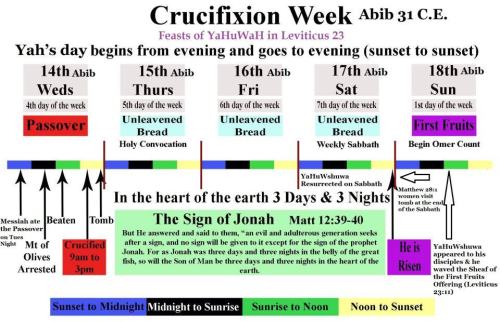
    The fourteenth of Nisan began at sunset Wednesday evening. That night, Jesus and His disciples had the “last supper” in the upper room where they were preparing to eat the Passover the following night. At this meal “ before the feast of the passover ” (Jn:13:1), Jesus told His disciples, “One of you shall betray me” (Jn:13:21). Earlier He said, significantly, “I tell you before…that, when it is come to pass, ye may believe that I am he” (Jn:13:19). The word “he” is in italics and does not appear in the original. Jesus was declaring once again to His disciples that He was Yahweh, the I AM of Israel, who tells beforehand what will happen and makes certain that it comes to pass (Is 46:9-10).

    Arrested by the Judas-led troop in the Garden later that night, Christ was taken secretly to the palace of Caiaphas, the high priest. A sham trial with hastily called false witnesses convened sometime after midnight and condemned Christ to death as dawn broke. Pilate, the Roman governor, was notified of the emergency. Hurriedly taken down side streets, the prisoner was received into the citadel at “the third hour” (Mk 15:25), (about 9:00 am), Nisan 14. All over Israel preparations were underway to kill the Passover lamb, which was to be eaten that night.

    Pilate let his citizens decide the prisoner’s fate. The bloodthirsty rabble turned against the One who had miraculously healed and fed so many of them. “Crucify him, crucify him” (Lk 23:21). “His blood be on us, and on our children” (Mt 27:25).

    Shortly before noon, Jesus, scourged and beaten, was led out of the city to “the place of the skull.” By noon, the One whom Jerusalem, in fulfillment of prophecy, had hailed as its long-awaited Messiah, was hanging naked on the center cross between two thieves. Man had crucified his Creator!

    The next three hours of that Thursday afternoon the earth was darkened mysteriously (Mt 27:45) as God “laid on him the iniquity of us all” (Is 53:6). Thursday? Not “Good Friday”? Indeed not. Jesus himself had said, “For as Jonas was three days and three nights in the whale’s belly; so shall the Son of man be three days and three nights in the heart of the earth [i.e., “Abraham’s bosom”]” (Mt 12:40; Lk 16:22). The gospel includes the declaration that Christ “rose again the third day” (1 Cor:15:4).

    Had Christ been crucified on Friday, He couldn’t possibly have spent three days and three nights in the grave by Sunday morning. We are distinctly told that the angel rolled away the stone “as it began to dawn toward the first day of the week” (Mt 28:1). The tomb was already empty, so Christ must have risen from the dead sometime prior to dawn.

    Wednesday, Thursday, Friday—does it really matter? Yes! The day of our Lord’s crucifixion is of the utmost importance. If Christ was not three days and three nights in the grave, then He lied. His death, to fulfill prophecy, had to occur at the very time the Passover lambs were being slain throughout Israel. It is an astronomical fact that Nisan 14, AD 32, fell on Thursday.

    “And it was the preparation of the passover ….The Jews therefore…that the bodies should not remain upon the cross on the sabbath day…besought Pilate that their legs might be broken, and that they might be taken away” (Jn:19:14,31). Wait! Not a bone of the Passover lamb (Ex 12:46) or of the Messiah (Ps:34:20) could be broken. Not knowing why he did it, “one of the soldiers with a spear pierced his side” (Jn:19:34), fulfilling yet another scripture: “they shall look upon me whom they pierced” (Zec:12:10).

    John explains that the “Sabbath,” which began at sunset the Thursday Christ was crucified, “was an high day.” It was, in fact, the first day of the Feast of Unleavened Bread, of which the first and last days were special sabbaths. It ended Friday at sunset, immediately followed by the weekly sabbath that ended at sunset on Saturday. Thus two sabbaths followed Christ’s death, preventing the women from coming to the grave until the third day, Sunday morning.

    The rabbis thought that having Jesus crucified proved He wasn’t the Messiah. In fact, it was one more proof that He was! The soldiers took His clothes for a souvenir and gambled for His robe (Ps:22:18; 69:21); He was given vinegar mixed with gall to drink, nails were driven into His hands and feet, and a spear pierced His side, drawing forth the blood of our redemption—all in fulfillment of prophecy!

Top of Form
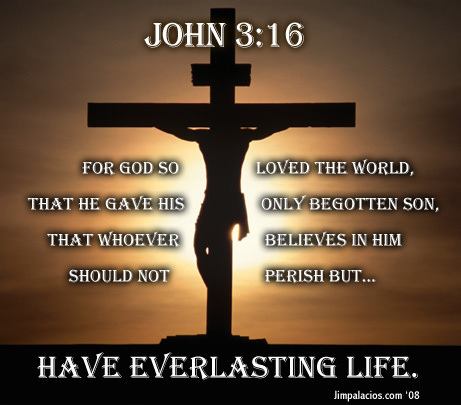
All that I KNOW ….is that Yeshua lived and DIED….and rose…….for my sins. HE IS.

Jesus died on Passover. Passover “day” or event changes from year to based on the Jewish month of Nisan. The Bible says that Jesus rose 3 days later. Friday to Sunday morning is not 3 days. The Edict of Milan 313 AD, Emporer Constantine and Licinius affirmed Galerius decision to legalize Christianity and hence changed our celebration of the Feasts of the Lord… specifically Passover for Christians to the pagan feast of Astarte (which became our Easter) along with Good Friday as the death instead of Passover. Jesus referred to Jonah being three days in the belly of the whale… as a type of his death. When he saiys three days, he means three days.

This is the fingerprint of God, people. Do not ignore it. If He has revealed it in His Book, then He obviously intended for us to see it, read it, understand it and be BLESSED by it.

It IS important because Jesus fulfilled the Scriptures.

    • 1798_10151350820307903_2024551077_n 

http://www.torahtimes.org/pbook/default.html http://www.torahtimes.org/pbook/Review%20Of%20Michael%20Rood.pdf

http://www.torahtimes.org/pbook/Review%20Of%20Michael%20Rood.pdf


Tuesday, November 27, 2012

THE EYE OF THE NEEDLE

The Eye Of The Needle


 http://www.flickr.com/photos/bluetoothboo/5072838780/


 http://www.flickr.com/photos/magdeeta/5943854256/

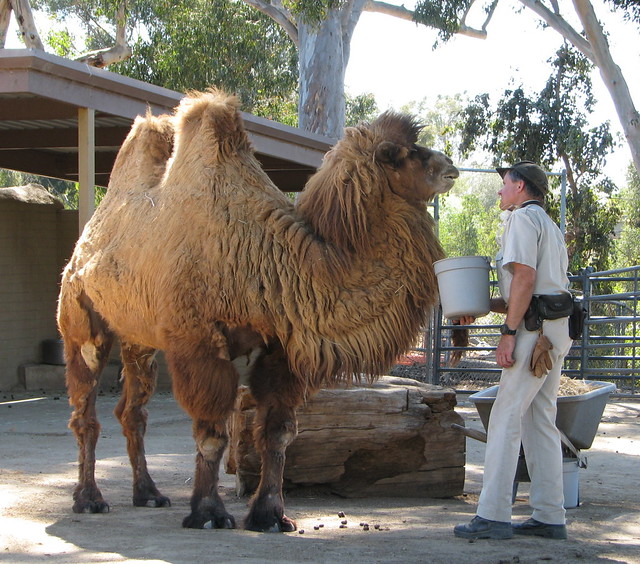
Q.  I remember being told that in Jerusalem there was a passage between two walls of the city that was referred to as the eye of the needle. It was very difficult for a camel to go thru and hence the words from Christ that it was easier for a camel to go thru the eye of a needle then for a rich man to enter the Kingdom of Heaven. This was a reference to that area in between the walls and the people understood that it would be difficult but certainly not impossible. Have you heard of this?

 A. Over the years I’ve come across several opinions on what the Lord really meant by the eye of the needle comparison.  All of them have tried to moderate the degree of difficulty rich people have in getting into heaven by making the eye of the needle symbolic of something else.

But the Lord’s statement came on the heels of His discussion with the rich young man.  He went away sad because the Lord had exposed his over riding love of wealth.  It was so strong that he couldn’t sell his possessions even if it kept him out of the Kingdom (Mark 10:17-24).


http://www.flickr.com/photos/teddygreen/4773600186/

After the Lord’s gave His “eye of a needle” illustration (Mark 10:25) Peter asked who could possibly be saved because the Jews believed that wealth was a reward for righteousness. The Lord answered that while salvation was impossible for man, it was not impossible for God. All things are possible for God. (Mark 10:27)

I think the Lord had a literal needle and a literal camel in mind to show that it’s literally impossible for even a righteous rich man to get himself into the Kingdom. Only the Lord can do it.  It was as vivid a picture of His Grace as you’ll find anywhere in Scripture

http://gracethrufaith.com/

Sunday, October 18, 2009

WHY MEMORIZE SCRIPTURE ?

Why Memorize Scripture?

(Psa 119:10-12 KJV)

With my whole heart have I sought thee O Lord:

O let me not wander from thy commandments.

{11} Thy word have I hid in mine heart, that I might not sin against thee.

{12} Blessed art thou, O LORD: teach me thy statutes.

Memorizing Scripture has many benefits.

In Joshua 1:7-8 the Lord tells Joshua,

(Josh 1:7-8 KJV)

Only be thou strong and very courageous,

that thou mayest observe to do according to all the law,

which Moses my servant commanded thee:

turn not from it to the right hand or to the left,

that thou mayest prosper whithersoever thou goest.

{8} This book of the law shall not depart out of thy mouth;

but thou shalt meditate therein day and night,

that thou mayest observe to do according to all that is written therein:

for then thou shalt make thy way prosperous, and then thou shalt have good success.

Our spiritual prosperity will be greatly affected by our diligence to meditate upon and obey God's word. Memorization is a means to meditation. As we memorize, Scripture, the Holy Spirit can then bring it to our remembrance, we can then meditate on it and apply it to our lives.

16 reasons to memorize Scripture:

Help in avoiding sin

Ps 119:11 I have stored up your word in my heart, that I might not sin against you.

Comfort in affliction

Ps 119:50 This is my comfort in my affliction, that your promise gives me life.

Spiritual life

Ps 119:93 I will never forget your precepts, for by them you have given me life.

Wisdom

Ps 119:98-100 Your commandment makes me wiser than my enemies, for it is ever with me. I have more understanding than all my teachers, for your testimonies are my meditation. I understand more than the aged, for I keep your precepts.

Delight

Ps 119:103 How sweet are your words to my taste, sweeter than honey to my mouth!

Guidance

Ps 119:105 Your word is a lamp to my feet and a light to my path.

Hope

Ps 119:114 You are my hiding place and my shield; I hope in your word.

Peace

Ps 119:165 Great peace have those who love your law; nothing can make them stumble.

A heart of worship

Ps 119:171-172 My lips will pour forth praise, for you teach me your statutes. My tongue will sing of your word, for all your commandments are right.

Freedom

Jn 8:31 So Jesus said to the Jews who had believed in him, "If you abide in my word, you are truly my disciples, 32and you will know the truth, and the truth will set you free."

Makes Scripture readily available to teach, witness, encourage or reprove others

2 Ti 3:16-17 All Scripture is breathed out by God and profitable for teaching, for reproof, for correction, and for training in righteousness, that the man of God may be competent, equipped for every good work.

Increases our faith

Ro 10:17 So faith comes from hearing, and hearing through the word of Christ.

Victory over temptation

Mt 4:4 But he answered, "It is written, ' Man shall not live by bread alone,

but by every word that comes from the mouth of God.'" (This is from the account of Jesus' temptation in the wilderness. Jesus answered each of Satan's temptations by saying, 'It is written...' then quoting a Scripture from memory.)

Confidence in prayer

1Jn 5:14-15 And this is the confidence that we have toward him, that if we ask anything according to his will he hears us. And if we know that he hears us in whatever we ask, we know that we have the requests that we have asked of him.

To imitate Jesus' own example:

Jesus often quoted Scripture, for example:

When teaching

(Mat 5:21-22 KJV)

Ye have heard that it was said by them of old time, Thou shalt not kill;

and whosoever shall kill shall be in danger of the judgment:

{22} But I say unto you, That whosoever is angry with his brother without a cause shall be in danger of the judgment:

and whosoever shall say to his brother, Raca{GK=you worthless person}, shall be in danger of the council:

but whosoever shall say, Thou fool, shall be in danger of hell fire.

When tempted

(Mt. 4:1-4),

Then was Jesus led up of the Spirit into the wilderness to be tempted of the devil.

{2} And when he had fasted forty days and forty nights, he was afterward an hungered.

{3} And when the tempter came to him, he said,

If thou be the Son of God, command that these stones be made bread.

{4} But he answered and said, It is written,

Man shall not live by bread alone, but by every word that proceedeth out of the mouth of God.

When confronting the Pharisees

(Mt. 9:13),

And when the Pharisees saw it, they said unto his disciples,

Why eateth your Master with publicans and sinners?

{12} But when Jesus heard that, he said unto them,

They that be whole need not a physician, but they that are sick.

{13} But go ye and learn what that meaneth, I will have mercy, and not sacrifice:

for I am not come to call the righteous, but sinners to repentance.

and

When explaining the parables to his disciples

(Mk. 4:12).

And he said unto them, Unto you it is given to know the mystery of the kingdom of God:

but unto them that are without, all these things are done in parables:

{12} That seeing they may see, and not perceive; and hearing they may hear, and not understand;

lest at any time they should be converted, and their sins should be forgiven them.

http://www.forevergratefulmusic.com/why_memorize_scripture.htm