MARANATA !!!

MARANATA !!!
Showing posts with label Isaac. Show all posts

Monday, September 17, 2012

WHERE ISTHE SECRET PLACE OF THE MOST HIGH ?-Where is He to be found as a protection?-By: J N Darby


The Most High

By: J N Darby

Still God is, of course, always such, and referred to in trial as the One who will set all right. When the Lord is just coming into the world to set all in order, the question is raised, Where is the secret place of the Most High? Where is He to be found as a protection? Whoever finds Him will have the protection of Abraham’s God, the God of Abraham, Isaac, and Jacob, the place of promise. Jehovah is it, the God of Israel. And in fact the full divine care of the supreme God, the God of promise, is found, possessor of heaven and earth, revealed in connection with the Melchisedec priest.I have been looking into the force of the Hebrew words for most High. That it ultimately refers to God in the millennium as the supreme God then manifested, to the exclusion of what is false, is evident. This is the force of the word—One who, to the exclusion of and superiority over all others, holds the place of the one true God, but exalted as supreme in government. Jehovah is, as we know, the God who is in relationship with Israel, but He is the supreme God, the Most High. The full statement of the title, and the time of taking it, is in Genesis 14:19, 20, 22.Israel’s enemies are entirely discomfited, and delivered into his hand, and the heir of promise blessed of Him who possesses heaven and earth. He is supreme, and has taken all things into His possession.


Hence, too, when Nebuchadnezzar is restored from a state that represents the character of the empires which began in him, he owns the Most High; Dan. 4:25-34.

In the Psalms the use of it is frequent. In Psalm 21 it is connected with the royalty of Christ as the glorified Man and King. His hand will find out all His enemies and by the favour of the Most High He will not be moved. In Psalm 46 God is again in the midst of His people on Messiah’s triumph (Psalm 45). The tabernacles are those of the Most High. His power is fully displayed in the earth, Jehovah being with Jacob. So more fully as to the world in Psalm 47. In Psalm 50 Most High is connected with the judgment of God in power. In Psalms 9, 10, 55, and 57, it is calling upon Him in this character by the remnant when in distress, the first of the two latter speaking of the distress, the second of the delivering supremacy over all the earth. Psalm 73 is the first of the third book, and the power of the Most High despised by the adversariesbut, going into the sanctuary, their judgment is discovered. The years of the Most High are remembered in Psalm 77, His way is in the sanctuary and in the sea; not looking to heart-failing in man, but to Jehovah, the Supreme, who accomplishes His good pleasure. In this and the next it is Jehovah’s right to this name, as in all the history of Israel. For this is all Israel. Psalms 82 and 83 are both judgment at the close, and in the fullest way to recognise that Jehovah is the Most High over all the earth. Psalm 91 has been spoken of. Psalm 92 is the same perishing of the enemies, and exalting the true David. Psalm 97 is expressly as Jehovah reigning, and as Most High over all the earth, and exalted above the gods when He comes to judgment. In Psalm 107 it is Israel re-gathered, who celebrates God’s government, and His chastisement for their rebellion against Jehovah who is the Most High.


We have the Most High in Daniel 7, though in most of the occurrences it is in the plural for “high” or “heavenly places.” There its connection with God’s title, and making good His dominion, and this connected with Israel, is evident. Thus, though Jehovah is looked back to in self-judgment in the history of Israel, as Psalms 56, 57, 73, 77, yet the force of the title is evident.

New Testament Assembly

September 17, 2012 //Stockton Bible Chapel  http://stocktonbiblechapel.wordpress.com/


Thursday, July 5, 2012

INVISIBLE BUT EVERLASTING!!

INVISIBLE BUT EVERLASTING!!

Invisible but everlasting!


Deuteronomy 33:27 – The eternal God is your refuge, and underneath are the everlasting arms.

The eternal God with everlasting arms has proved to His children that He has great pleasure in taking care of them. It has been His privilege to give refuge to His children in times of trouble. His protection is all around His children. He keeps us in the palm of His hands so that our feet would not get hurt in the stony and thorny pathways which we tread. We do not know what lies ahead of us on the pathway, but He knows the way and has gone before us to make sure that we do not stagger or stumble. He covers us from every danger on the way and all the snares of the enemy. When we go through heartaches and burdens, we can take refuge in the Lord and entrust all our concerns to Him. He will then cuddle us like a mother takes care of her little ones. We are fearless and fortified under His everlasting wings and all our times are covered by Him. He knows us in and out and has provisions for all our needs. His everlasting arms stretch out to all our situations to help and deliver. His hands give us His divine touch which heals our broken hearts and emotions. He builds and rebuilds us when we are torn down by the enemy of our souls. There was a time when David felt that he and his people were like a tree on a wayside being violated by passersby. They pass away, but our Lord stays with us. They do not realize that when they hurt us, they truly hurt our Lord. He forgives them for hurting Him and His children, but desires that through the fruit they eat from our trees, they would come to Him and find rest for their souls. We see that the everlasting arms of our Lord sustain His children in times of trouble and bring them out of their testing times to moments of peace, rest and tranquility. He wants to touch us with those arms today so that we would enjoy His healing, sustenance, comfort, security and goodness.

Dear reader, it is good for you to remember today that you are under the purview of the everlasting arms of our Lord no matter what your situation is. His invisible hands reach out and touch you in all your situations. It is because of His arms that we are sustained today. We have the privilege to enjoy the safety and security that His presence provides. He is available to us no matter where we are. Daniel had His arms in the den of the hungry lions and the Hebrew youth had His arms in the fiery furnace. Noah had the privilege to enjoy it in the flood and David enjoyed it when Goliath encountered him and while he was hiding in a cave. Joseph experienced these everlasting arms in the pit and the dungeon. So did Jeremiah in the broken cistern. His everlasting arms picked up Ruth from the enemy country and made her the bride of Boaz so that she would become a great grandmother of Jesus. These arms brought Rehab out of Jericho and made her the bride of Salmon and the great grandmother of Jesus. The same arms of the Lord picked up a village girl by the name Rebekah and made her the bride of Isaac and thus to become another great grandmother of Jesus. His arms were with them and their generations all the way from Adam as these arms stretch out and touch our generation and exhibit His faithfulness to us at all times. Our Lord existed above timelines, and He lives through the faithfulness that He has been demonstrating in our lives even today. As He is our refuge, today we can look at our unknown tomorrows with a smile on our faces and confidence in our hearts to keep going forward with Him. His faithfulness, mercy and goodness will surely follow us on all our tomorrows. Hallelujah!!

Psalms 91:4 – He will cover you with His feathers, and under His wings you will find refuge; His faithfulness will be your shield and rampart.

                                                                 Thought for Today

God’s everlasting arms are so vast as to cover all His children at all times and in all situations.

  For further spiritual help and prayer support, contact:

 Verse for Today: Saturday, June 30, 2012

Sunday, May 20, 2012

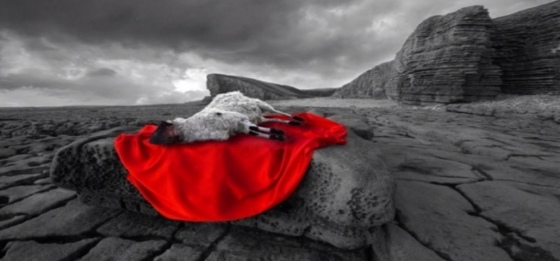
BLOOD SACRIFICE: Why Is Sacrifice Important to God?

Blood Sacrifice: Why Is Sacrifice Important to God?.

wpid-Photo-Apr-17-2012-120-PM.jpg
Blood Sacrifice | TE Hanna | Of Dust and Kings

One of the most common criticisms leveled against Christianity is the argument that this “God of love” is, in reality, a violent, bloodthirsty deity with an unhealthy appetite for blood sacrifice. After all, what sort of God connects forgiveness with the slaughter of innocent animals? Were blood sacrifice in vogue today, we certainly would be guilty of any number of animal rights violations, not to mention that modern psychology identifies the killing of animals to be an early marker for sociopathy. When seen from our modern vantage point, the blood sacrifice of the Old Testament is an understandable issue.

Definition of Sacrifice

In fact, the first seven chapters of Leviticus are replete with the laws concerning various forms of animal sacrifice. These are:

  • Burnt offerings, whereby the animal is sacrificed, drained of blood, and then completely consumed by fire.

  • Grain offerings (sometimes referred to as meat offerings in the KJV, as the Old English definition of ‘meat’ often referred simply to food), whereby grain or other foods from the field are presented and consumed by fire.

  • Peace offerings, whereby an animal is sacrificed, cleaned, cooked on the altar, and eaten as a shared meal. This is most typically a lamb.

  • Sin and guilt offerings, whereby a priest offers a blood sacrifice on behalf of the sin of another, the offering is then cleaned, cooked, and eaten by the priesthood.

The very fact that the opening seven chapters of Leviticus detail specifically how these are to be done belies the significance which blood sacrifice had to ancient Israelite worship. It still leaves the question unanswered, however… why does God demand blood sacrifice?

Animal Sacrifice

To get to the heart of this, we have to backtrack. The birth of monotheism was with Abraham*, as God revealed Himself and made covenant. It was this covenant which eventually brought forth Israel. In the ancient world, however, covenant was signified through sacrifice. An animal would be killed, its lifeblood drained, and the carcass cut in half. The two individuals making the pact would then walk, together, between the two halves of the slain animal, which signified the gravity of the vow they had made. The implication was that, should either of them violate the covenant, may the one in violation fall victim to the same fate which befell the slain beast before them. Covenant was a big deal.

So it was that, when God made covenant with Abraham, He did it in the only manner which Abraham understood – through sacrifice. This is important, because it reveals an aspect of God that is central to Christian theology: God meets us where we are, and leads us forward. Sacrifice, from this point forward, was centered around the covenant which God made with Abraham. Burnt offerings and grain offerings were offerings of livelihood, offering up to God that which we rely on, reminding us that our hope is found in God alone. Sin and guilt offerings were offerings of covenant restoration, offered on behalf of the priesthood, restoring those who had violated the covenant back into relationship with God. Peace offerings were similar, but directed at the community. The sacrificed animal would be cooked and the meal shared, that relationship with one another may be restored.

Of course, God was very clear to set limits on sacrifice, and would eventually deal with the practice itself. When Abraham was sent to offer up Isaac, his son, this was a matter of establishing proper boundaries for sacrifice. There, in Canaan, it was common practice to sacrifice the first-born child to one of the pagan gods, in the hope of slaking the deity’s wrath and preserving the lives of future children in a time where infant mortality was abysmally high. God, through Abraham’s obedience, changed this practice for His followers. Sacrifice was limited to animals that were sources of food, not children. By the Exodus, in fact, sacrifice was explicitly linked to food offerings, as the lamb slain at Passover was to be eaten as part of the ritual. In time, however, even the covenant meaning which was the basis for blood sacrifice became lost, and animal sacrifice was reduced to a ritual. Thus, by Hosea, we hear the lament of the Lord, “For I desire steadfast love and not sacrifice, the knowledge of God rather than burnt offerings. But like Adam they transgressed the covenant; there they dealt faithlessly with me.” (Hosea 6:6-7)

The End of Blood Sacrifice

So it was that Jesus ended sacrifice for all time. The covenant with Abraham was that God would make him the father of many nations, and that through him all the nations of the earth would be blessed. The fulfillment of that covenant was met in His son, Jesus. The quintessential blood sacrifice under the Old Covenant was represented in the Passover lamb. This lamb would be brought forth three days prior to Passover, and observed for three days to make sure it was without blemish or defect. On the third day, Passover Eve, the lamb would be sacrificed, drained of blood, cooked, and eaten with bitter herbs. Through this, it was remembered how the blood of the lamb protected the children from death in Egypt, and set them free from their slavery.

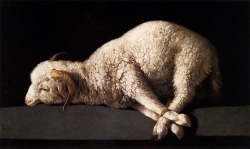
Jesus entered Jerusalem three days prior to Passover. For three days He was tested by Caiaphas, Annas, the Pharisees, the Sadducees, the teachers of the law, and finally Pontius Pilate… who declared that he found nothing wrong with Jesus. On Passover Eve, the Lamb of God was sacrificed on a cross, so that by His blood the angel of death may not claim us and we are set free from our slavery to sin. Jesus became the perfect sin offering.

The night He was betrayed, He broke bread, announcing it to be His body, broken for us. He took wine, and, giving thanks, offered it to us as His blood of the New Covenant. Through Eucharist, we partake of Jesus as the perfect peace offering.

The only offering remaining was the burnt offering and the grain offering – the offering of livelihood, freely given to remind us that our provision is found in God alone. This we still practice, but it is instead found in the offering of our livelihood delivered into a little wooden plate passed around on Sunday morning. Our livelihood has changed; so the offering has changed to match.

Blood sacrifice was necessary because it reflects a God who meets us where we are at and leads us from there. Blood sacrifice is complete, perfectly fulfilled, as the Lamb of God, the perfect sacrifice, offered Himself once for all. God still meets us where we are at. Hopefully, we still follow as He leads us home.

*Some scholars argue that monotheism began with Zoroastrianism in the Persian Empire, not with Judaism. These arguments are dependent on a late-date hypothesis pertaining to the penning of the Torah. There is significant grounding for an early-date authorship, however, which dates the penning of the opening books of Scripture to the Exodus or shortly thereafter. If we accept the early date, then Judaism preceded Zoroastrianism by nearly 600 years, and the birth of Zoroastrianism can be traced to the period of Israel’s captivity in Persia. During their captivity, Israel would certaily have exerted significant influence on the cultural philosophy out of which Zoroastrianism was born.

17 April 2012