MARANATA !!!

MARANATA !!!
Showing posts with label reformation. Show all posts

Tuesday, October 31, 2017

REFORMATION- RESOURCES FOR YOU !!

Christianity can be condensed into four words: Admit, Submit, Commit and Transmit. -Samuel Wilberforce
 Reformation resources for you
The 500th anniversary of the Reformation is coming up on October 31st. This is the date when, 500 years ago, Roman Catholic monk and professor Martin Luther nailed his 95 Theses to the University of Wittenberg’s chapel door. Nailing a tract on the door was not in itself an act of rebellion, but rather the usual and customary method of starting a discussion among scholars of religious points of the day. It was the 16th century’s version of the internet.
However, Luther’s theses were not just questions and discussion points, but a devastating critique of Roman Catholic practices. Luther had found in his studies that Roman Catholic faith and practice varied greatly from the word of God. Luther was especially upset over the practice of Indulgences, or payment to the Church for reduction or absolution of certain sins. Paying for sins to be forgiven seemed incredibly wrong to Luther. He wrote up his questions, intending to spark a discussion.
He sparked a discussion.
The discussion has been ongoing for 500 years.
The discussion split The Catholic Church and pitted it against those who were protesting, now known as Protestants.
The most confusing thing to me when I was an unsaved person was the Catholic Church. I thought it was a Christian church. Because of its size and longevity, I thought it represented true Christianity. What I didn’t know was that the Roman Catholic Church (RCC) is as far from Christianity as the east is from the west. It does not represent the faith of Jesus, but instead is a false belief system.
The protest Luther made was against certain practices and doctrines of the RCC. For example, the Jesus we know through the inspired scriptures is the central authority, not the Pope or other officials. Practices and rituals and good works do not save. Indulgences are nowhere found in the Bible. Though Luther initially wanted to renew the church, eventually it divided over these and other issues, and the Protestant reformation began.
Here are some Reformation Day resources for you-
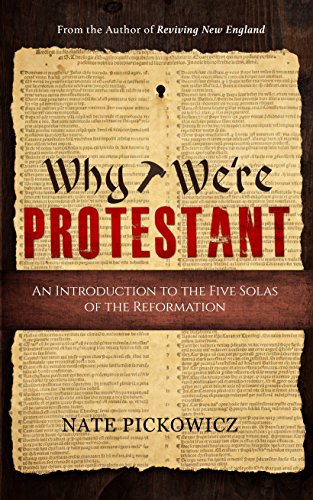
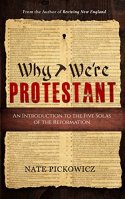
Why We’re Protestant: An Introduction to the Five Solas of the Reformation Kindle Edition. A paperback edition exists. By Nate Pickowicz, Foreword by Steven J. Lawson. Nate is a pastor who shepherds a church in New England. His wife Jessica has written a Bible study to go along with MacArthur’s new book, Biblical Doctrine and facilitates a Facebook group regarding the weekly study sessions.
Synopsis: How do you discern true vs. false Christianity? In the days of the Protestant Reformation, the core tenets of the faith were strenuously examined. In the end, the Reformers maintained that at the heart of the Christian faith stood five main credos: sola Scriptura, sola gratia, sola fide, solus Christus, and soli Deo gloria. This book examines these five “solas” and makes a definitive case for why we’re Protestant.
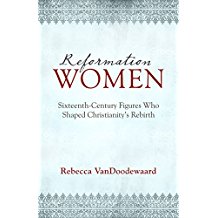
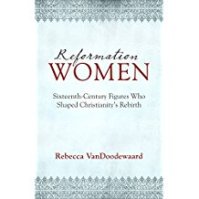
By Rebecca VanDoodewaard. Rebecca and her husband William used to run a blog I liked, called The Christian Pundit.
Synopsis: Women are an essential element in church history. Just as Deborah, Esther, and the New Testament Marys helped shape Bible history, so the women of the Reformed church have helped to make its history great. In Reformation Women, Rebecca Vandoodewaard introduces readers to twelve sixteenth-century women who are not as well known today as contemporaries like Katie Luther and Lady Jane Grey. Providing an example to Christians today of strong service to Christ and His church, these influential, godly women were devoted to Reformation truth, in many cases provided support for their husbands, practiced hospitality, and stewarded their intellectual abilities. Their strength and bravery will inspire you, and your understanding of church history will become richer as you learn how God used them to further the Reformation through their work and influence.
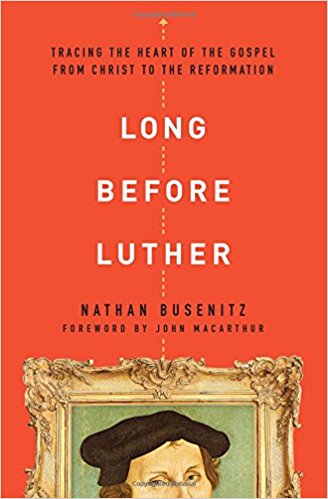
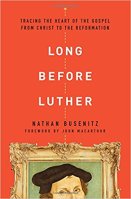
Long Before Luther: Tracing the Heart of the Gospel From Christ to the Reformation by Nathan Busenitz  (Author), John MacArthur (Foreword)
Synopsis: Where was the gospel before the Reformation?
Contemporary evangelicals often struggle to answer that question. As a result, many Roman Catholics are quick to allege that the Reformation understanding of the gospel simply did not exist before the 1500s. They assert that key Reformation doctrines, like sola fide, were nonexistent in the first fifteen centuries of church history. Rather, they were invented by Martin Luther, John Calvin, and others.
That is a serious charge, and one that evangelicals must be ready to answer. If an evangelical understanding of the gospel is only 500 years old, we are in major trouble. However, if it can be demonstrated that Reformers were not inventing something new, but instead were recovering something old, then key tenets of the Protestant faith are greatly affirmed. Hence, the need for this book.
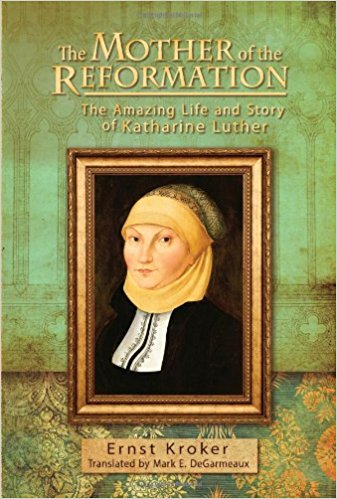
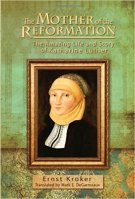
by Ernst Kroker. Synopsis- The author paints an intimate picture of Katie and of family life in the Black Cloister during the formative years of the Reformation, showing how Katie s marriage to Martin Luther was a multifaceted vocation, with such tasks as household brew mistress, cloister landlady, property overseer, gardener, cow- and pig-herder, and fishwife. Indeed, Katie oversaw their home much like a lord in her kingdom, yet in the midst of it all stood the man to whom her work, concern, and duty were directed.
 Resources for children
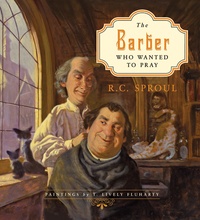
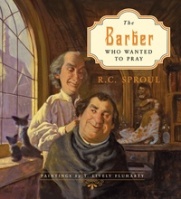
Synopsis: This imaginative tale from R.C. Sproul, based on a true story, begins one evening with Mr. McFarland leading family devotions. When his daughter asks him how she should pray, Mr. McFarland shares a 500-year-old story about a barber and his famous customer.
Master Peter is a barber well-known to all in his village. One day, when Martin Luther the Reformer walks into his shop, the barber musters up the courage to ask the outlawed monk how to pray. Luther responds by writing a letter to the barber. The barber’s life and many others’ are changed as they encounter a model for prayer by using the Lord’s Prayer, the Ten Commandments, and the Apostles’ Creed.
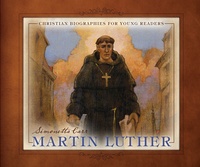
Synopsis- Five hundred years ago, a monk named Martin Luther wrote ninety-five questions, hoping to start a discussion about sin and repentance at the University of Wittenberg in Germany. In a few months those questions had stirred the nation; a few years later, the continent. Today we know that those questions changed the course of both the Western church and world history. In this volume for children, Simonetta Carr tells the compelling story of this father of the Protestant Reformation, tracing his quest for peace with God, his lifelong heroic stand for God’s truth, and his family life and numerous accomplishments. The Reformer’s greatest accomplishment, she writes, “has been his uncompromising emphasis on the free promise of the gospel.”
Movie-

Martin Luther: The idea that changed the world, PBS documentary, 9/2017, as synopsized by Banner of Truth Trust hereThe PBS documentary has an extended trailer hereOfficial website here.

Monday, December 31, 2012

ARE YOU ASLEEP-“Awake thou that sleepest.”-Eph. 5:14


18305_417021841700247_809661919_n

ARE YOU ASLEEP?

Author: J.C. Ryle
Source: SermonIndex.net

“Awake thou that sleepest.”-Eph. 5:14

Sleeping Soldier

I put before you now a simple question. Look through the pages of this paper and you will soon see why I ask it. “Are you asleep about your soul?”
There are many who have the name of Christians, but not the character which should go with the name. God is not King of their hearts. They mind earthly things.
Such persons are often quick and clever about the affairs of this life. They are, many of them, good men of business, good at their daily work, good masters, good servants, good neighbors, good subjects of the Queen: all this I fully allow. But it is the eternal part of them that I speak of; it is their never dying souls. And about that, if a man may judge by the little they do for it, they are careless, thoughtless, reckless, and unconcerned. They are asleep.
I do not say that God and salvation are subjects that never come across their minds: but this I say,—they have not the uppermost place there. Neither do I say that they are all alike in their lives; some of them doubtless go further in sin than others: but this I say,—they have all turned every one to his own way, and that way is not God’s. I know no rule by which to judge of a man’s estate but the Bible. Now when I look at the Bible I can come to only one conclusion about these people: they are asleep about their souls.

These people do not see the sinfulness of sin, and their own lost condition by nature. They appear to make light of breaking God’s commandments, and to care little whether they live according to His law or not. Yet God says that sin is the transgression of the law,—that His commandment is exceeding broad,—that every imagination of the natural heart is evil,—that sin is the thing He cannot bear, He hates it,—that the wages of sin is death, and the soul that sinneth shall die. Surely they are asleep.
Is this the state of your soul? Remember my question.

ARE YOU ASLEEP?

These people do not see their need of a Saviour. They appear to think it an easy matter to get to heaven, and that God will of course be merciful to them at last, some way or other, though they do not exactly know how. Yet God says that He is just and holy, and never changes,—that Christ is the only way, and none can come unto the Father but by Him,—that without His blood there can be no forgiveness of sin,—that a man without Christ is a man without hope,—that those who would be saved must believe on Jesus and come to Him, and that he who believeth not shall he damned. Surely they are asleep!
Once more I say, is this the state of your soul?
Remember my question.

ARE YOU ASLEEP?

These people do not see the necessity of holiness. They appear to think it quite enough to go on as others do, and live like their neighbors. And as for praying and Bible-reading, making conscience of words and actions, studying truthfulness and gentleness, humility and charity, and keeping separate from the world, they are things they do not seem to value at all. Yet God says that without holiness no man shall see the Lord,—that there shall enter into heaven nothing that defileth,—that His people must be a peculiar people, zealous of good works. Surely they are asleep!
Once more I say, is this the state of your soul? Remember my question.

ARE YOU ASLEEP?

Worst of all, these people do not appear to feel their danger. They walk on with their eyes shut, and seem not to know that the end of their path is hell. Some dreamers fancy that they are rich when they are poor, or full when they are hungry, or well when they are sick, and awake to find it all a mistake. And this is the way that many dream about their souls. They flatter themselves they will have peace, and there will be no peace; they fancy that they are all right, and in truth they will find that they are all wrong. Surely they are asleep!
Once more I say, is this the state of your soul? Remember my question.

Sleeping Guard

ARE YOU ASLEEP?

If conscience pricks you, and tells you you are yet asleep, what can I say to arouse you? Your soul is in awful peril. Without a mighty change it will be lost. When shall that change once be?
You are dying, and not ready to depart,—you are going to be judged, and not prepared to meet God,—your sins are not forgiven,—your person is not justified,—your heart is not renewed. Heaven itself would be no happiness to you if you got there, for the Lord of heaven is not your friend: what pleases Him does not please you; what He dislikes gives you no pain. His word is not your counsellor; His day is not your delight; His law is not your guide. You care little for hearing of Him: you know nothing of speaking with Him. To be forever in His company would be a thing you could not endure; and the society of saints and angels would he a weariness, and not a joy. At the rate you live at, the Bible might never have been written, and Christ might never have died, the Apostles were foolish, the New Testament Christians madmen, and the salvation of the Gospel a needless thing. Oh, awake! and sleep no more.
Think not to say you cannot believe your case is so bad, or the danger so great, or God so particular. I answer,—the devil has been putting this lying delusion into people’s hearts for nearly six thousand years. It has been his grand snare ever since the day he said to Eve, “Ye shall not surely die.” Do not be so weak as to be taken in by it. God never failed yet to punish sin, and He never will: He never failed to make His word good, and you will find this to your cost, one day, except you repent. Reader, awake: awake!
Think not to say you are a member of Christ’s Church, and therefore feel no doubt you are as good a Christian as others. I answer,—this will only make your case worse, if you have nothing else to plead. You may he written down and registered among God’s people: you may be reckoned in the number of saints; you may sit for years under the sound of the Gospel; you may use holy forms and even come to the Lord’s table at regular seasons; and still, with all this, unless sin be hateful, and Christ precious, and your heart a temple of the Holy Ghost, you will prove in the end no better than a lost soul. A holy calling will never save an unholy man. Reader, awake: awake!
Think not to say you have been baptized, and so feel confident you are born of God, and have His grace within you. I answer,—you have none of the marks which St. John has told me, in his first epistle, distinguish such a person. I do not see you confessing that Jesus is the Christ, overcoming the world,—not committing sin,—loving your brother,—doing righteousness,—keeping yourself from the wicked one. How then can I believe that you are born of God? If God were your Father, you would love Christ: if you were God’s son, you would be led by His Spirit. I want stronger evidences. Show me some repentance and faith; show me a life hid with Christ in God; show me a spiritual and sanctified conversation: these are the fruits I want to see, if I am to believe you have the root of the matter in you, and are a living branch of the true vine. But without these your baptism will only add to your condemnation. Reader, awake: awake!
I speak strongly, because I feel deeply. Time is too short, life is too uncertain, to allow of standing on ceremony. At the risk of offending, I use great plainness of speech. I cannot bear the thought of hearing you condemned in the great day of assize; of seeing your face in the crowd on God’s left hand, among those who are helpless, hopeless, and beyond the reach of mercy. I cannot bear such thoughts,—they grieve me to the heart. Before the day of grace is past, and the day of vengeance begins, I call upon you to open your eyes and repent. Oh, consider your ways and be wise. Awake: awake! Why will ye die?
This day, as the ambassador of Christ, I pray you to be reconciled to God. The Lord Jesus who came into the world to save sinners,—Jesus the appointed Mediator between God and man,—Jesus who loved us and gave Himself for us,—Jesus sends you a message of peace: He says, “Come unto Me.”
“Come is a precious word indeed, and ought to draw you. You have sinned against heaven: heaven has not sinned against you. Yet see how the first step towards peace is on heaven’s side. It is the Lord’s message: “Come unto Me.”
“Come” is a word of merciful invitation. Does not the Lord Jesus seem to say, “Sinner, I am waiting for you: I am not willing that any should perish, but that all should come to repentance. As I live, I have no pleasure in the death of him that dieth. I would have all men saved and come to the knowledge of the truth. Judgment is my strange work,—l delight in mercy. I offer the water of life to every one who will take it. I stand at the door of your heart and knock. For long time I have spread out my hands to you. I wait to be gracious. There is yet room in my Father’s house. My long-suffering waits for more of the children of men to come to the mercy-seat before the last trumpet is blown,—for more wanderers to return before the door is closed for ever. Oh, sinner, come to Me!”
Come” is a word of promise and encouragement. Does not the Lord Jesus seem to say, “Sinner, I have gifts ready for you: I have something of everlasting importance to bestow upon your soul. I have received gifts for men, even for the rebellious. I have a free pardon for the most ungodly,—a full fountain for the most unclean,—a white garment for the most defiled,—a new heart for the most hardened,—healing for the broken-hearted,—rest for the heavy-laden, joy for those that mourn. Oh, sinner, it is not for nothing that I invite you! All things are ready. Come: come unto Me.”
Hear the voice of the Son of God. See that you refuse not Him that speaketh. Come away from sin, which can never give you real pleasure, and will be bitter at the last; come out from a world which will never satisfy you: come unto Christ! Come, with all your sins, however many and however great,—however far you may have gone from God, and however provoking your conduct may have been. Come as you are: unfit, unmeet, unprepared as you may think yourself,—you will gain no fitness by delay. Come at once: come to the Lord Jesus Christ!
How indeed shall you escape if you neglect so great salvation? Where will you appear if you make light of the blood of Christ, and do despite to the Spirit of grace? It is a fearful thing to fall into the hands of the living God, but never so fearful as when men fall from under the Gospel. The saddest road to hell is that which runs under the pulpit, past the Bible, and through the midst of warnings and invitations. Oh, beware, lest like Israel at Kadesh, you mourn over your mistake when it is too late; or, like Judas Iscariot, find out your sin when there is no space for repentance.
Arise, and call upon the Lord. Be not like Esau: sell not eternal blessings for the things of today. Surely the time past may suffice you to have been careless and prayerless, Godless and Christless, worldly and earthly-minded. Surely the time to come may be given to your soul.
Pray, I beseech you, that you may be enabled to put off the old ways and the old habits, and that you may become a new man. I yield to none in wishes for your happiness, and my best wish is that you may be made a new creature in Christ Jesus. This is a better thing than riches, or health, or honour, or learning. A man may get to heaven without these, but he cannot get there without conversion. Verily if you die without having been born again you had far better never have been born at all. No man really lives till he lives unto God.
I leave my question with you. The Lord grant that it may prove a word in season to your soul. My heart’s desire and prayer to God is that you may be saved. Awake, thou that sleepest, and arise from the dead, and Christ shall give thee light. Arise, O sleeper and call upon God. There is yet hope. Forsake not thy mercies. Do not lose thine own soul.


© 2002-2012 SermonIndex.net Audio Sermons | Privacy Policy
All sermons can be copied for personal use and free distribution.

Related Articles:

Sunday, November 1, 2009

REVERSING THE REFORMATION

Reversing The Reformation - How Some So-Called Protestants Are Subtly Undermining Justification By Faith


Note: October 31 is Reformation Day, celebrating the Protestant Reformation, when the biblical gospel of grace was re-introduced to the Church at large.

The Roman Catholic Church held an almost monopolistic grip on the hearts of millions of people for hundreds of years.

Through the Dark Ages and Middle Ages, the awful legalistic system of "salvation by works" nearly choked out the light of the Gospel of the Grace of our Lord Jesus Christ. Only small pockets of true believers in Christ escaped the dark heavy blanket of Romanism.

Then around 500 years ago came what we call the Reformation.

Men like Luther and Zwingli and Calvin and Knox, intense students of the Scriptures, rose up and shined the light of the Gospel into the darkness of European Catholicism.

These brave men brought an end to the monopoly of the Popes. They boldly proclaimed that salvation was

by grace alone, not by merit;

by faith alone, not by works;

by faith in Christ alone, not in sacraments;

under the final authority of the Word of God alone, not the unscriptural teachings of the Bishops of Rome.

The Central Point of the Reformation

The central point of the Reformation is what we call Justification by Faith. This is the sublime and simple truth that when we believe in Jesus Christ we are “justified” or “declared righteous” by God. This means that we are fully in right standing with God, our sins forgiven and no longer held against us.

This is accomplished because God judged our sins in Christ on the Cross, and gave us the “gift of righteousness” (Romans 5:17) by imputing the righteousness of Christ to us, when we believe in Christ.

As 2 Corinthians 5:21 puts it, “He made Him who knew no sin to be sin on our behalf, so that we might become the righteousness of God in Him.”

Romans Chapter 5:1,2 gives us the result of this wonderful act of the Lord:

“Therefore having been justified by faith, we have peace with God through our Lord Jesus Christ, through whom also we have obtained our introduction by faith into this grace in which we stand; and we exult in hope of the glory of God.”

The Permanence of Justification

When we are justified, declared righteous by God, it is forever. It is permanent. And it occurs at the moment when we believe on the Lord Jesus Christ, when we believe the Gospel.

The "gift of righteousness" can never be taken away, because it is part of a package deal, to put it crudely. This righteousness is given to us by grace through faith, and that is “not of yourselves” and “not of works” (Ephesians 2:8,9). Even the very faith by which we believe in Jesus Christ is a gift given by God through the New Birth, regeneration.

This “imputed righteousness” contrasts starkly with the unbiblical Roman Catholic teaching that one is actually “made righteous” (“infused righteousness”) through the sacraments like Baptism, and the Eucharistic Mass, and through meritorious good works -- and that this so-called righteousness leaks out through sinning, and therefore can be lost, thereby damning the soul of the one who fails to maintain his “righteousness” by his works and attendance to the sacraments.

In Come the Neo-Legalists

The Reformation did not, of course, abolish Roman Catholicism. This cult of works salvation has continued these many years, and still thrives today.

But until recently one could more or less count on Protestant Bible teachers to uphold Justification by Faith Alone. One could more or less count on Protestant Bible teachers to oppose the so-called Justification of Rome, where grace and works are mixed, making it “no longer grace” (Romans 11:6).

But back in the 1960’s and 1970’s there was a professor at Westminster Seminary named Norman Shepherd. In 1975 some of his former students were being questioned for ordination, and when the question “How is a sinner justified?” was asked, they answered, “By faith and works.” Shocked questioners traced their answer back to their professor, Norman Shepherd.

Shepherd was allowed to teach for six more years, a disgrace in itself, but was finally released in 1981, the proverbial dung having hit the fan hard enough. Even then, several professors who then agreed with Shepherd were allowed to remain, teaching hundreds of students who spread the cancer yet today.

The big foot of undermining Justification by Faith had been stuck in the door, and the result has mushroomed into several full-blown ministries and movements, some directly from Westminster, and some relatively independent.

Allow me to name some names and then I will attempt to capsulize the kernel of the heresy.

Pioneering writers include E.P. Sanders, N.T. Wright, Steve Schlissel, Steve Wilkins, Douglas Wilson, and Peter Leithart.

They have been joined by a multitude of Pastors, bloggers and other writers, and teachers in Seminaries. Many in the Emerging/Emergent Church movement have gravitated toward these men, particularly N.T. Wright. And they have infiltrated otherwise orthodox places, including R.C. Sproul’s Tabletalk magazine, where R.C. Jr. as editor published a column by Douglas Wilson for three years, as well as articles by Steve Schlissel and Steve Wilkins.

They operate under names and ministries you may have heard: Shepherdism, Auburn Avenue Theology, Federal Vision, or the New Perspective on Paul. And they lead churches in virtually every Reformed denomination.

What They Have In Common

I won’t pretend the issues and sub-doctrines are not varied and even complicated, but they have one important thing in common – a rejection of the biblical Justification by Faith (even while sometimes saying they support it).

Like most false teachers, their terminology is often the same as orthodox terminology. But the expression of their error can mostly be bunched under an important term: Covenant Nomism (sometimes called Covenantal Nomism). “Nomism” refers to “Law”.

Though their implementation of the doctrine varies (for example, some teach that one enters the “covenant” through water baptism, others through so-called “faith alone”), the basics are as follows:

1.One enters into a “covenant” of the “people of God”, through “faith” and/or baptism. This is a real covenant which makes one a real Christian.

2.Once in the “covenant” of the family of God, it is now one’s responsibility to stay in the covenant, and follow Jesus as Lord all the days of one’s life…or else (more on the “or else” in a moment). This is blatant Legalism.

3.IF one remains in the “covenant”, by assembling together and obeying the Law sufficiently, THEN, at the end of one’s life, or the end of the age, one will be truly “Justified”, or “declared righteous” ON THE BASIS OF THEIR LIFE AND WORKS.

4.Here’s the “or else”: If one departs from sufficient obedience to the Law, or (in some cases) stops fellowshiping in the local assembly, they are deemed “out of the covenant”, will never be “justified”, even though they truly believed on the Lord Jesus Christ, and were in His “covenant” and were a true Christian. Their works, or lack of them, have ultimately damned them.

What Can Be Done?

Admittedly, this is an extremely brief introduction to Neo-Legalism, or Covenant Nomism.

The men teaching these things are not ignorant, and they’re not stupid. They are biblically classic false teachers.

What would I recommend?

1.I don’t recommend studying these men, except by the most discerning and biblically knowledgeable.

2.I do recommend studying the biblical doctrine of Justification by Faith, just as the FBI reputedly studies real money, in order to quickly identify the counterfeit.

There are many good books on the subject. A thorough classic is by James Buchanan, The Doctrine of Justification. Another good one, perhaps easier to read, is James White’s The God Who Justifies.

An excellent sermon by Charles Spurgeon can be read at:
http://www.spurgeon.org/sermons/3392.htm

Scriptural support for Justification by Faith can be found at:
http://www.carm.org/doctrine/justification_verses.htm

3.If you accept true biblical Justification by Faith, have courage to say so. And don’t be afraid to mention names.

Too many Protestant believers and teachers have been "returning" to Roman Catholicism. While for some there may be an inherent attraction to the ancient religious trappings of Romanism, in many cases it’s simply an abandonment of the great truth that God justifies us, declares us righteous, forever, when we believe in His Son, the Lord Jesus Christ. To Him be all the glory.

Friday, October 30, 2009