
| ||||||||
 | ||||||||
|
||||||||
|
| ||||||||
|
||||||||
|
| ||||||||
|
||||||||
|
| ||||||||
| ||||||||
Showing posts with label Old Testament. Show all posts
Showing posts with label Old Testament. Show all posts
Friday, September 13, 2013
HAVEN TODAY-FINDING THE GOSPEL IN THE JEWISH HOLY DAYS-JUST LISTEN


Sunday, September 8, 2013
THE MISSING JEWEL OF CHRIST’S RETURN
The Missing
Jewel of Christ’s Return

A CAREFUL AND prayerful study of the New Testament will lead us to see that Christ is central throughout its entirety. He is foreshadowed in the Old Testament and particularly through the main and minor prophets, the message is clear in pertaining to the Messiah to come; this was Israel’s hope. How the Anointed One was to be manifest was where many in Israel lost their way; many were looking for the physical restoration of the twelve tribes. Even the twelve disciples were anticipating Christ overthrowing tyranny by establishing a physical reign. For Him to die at the hands of a brutal regime was absolute madness and ran contrary to what they understood of the Scriptures. Only after when Christ opened their eyes (after His resurrection) and expounded the Scriptures, from Moses and all the Prophets, did they rightly perceive the kingdom of God.
Are we falling into the same error as Israel in foretelling and reading the signs of how and where Christ will appear? The Biblical Christ is seldom proclaimed in our westernised cultures and yet so many believers get so hung-up over eschatology (Doctrine of the Last Things). How are we to be balanced in regards to prophecy, pertaining to the future and of Christ’s Second Coming, when we fail to perceive Who He really is? If we are not enlightened (by the Holy Spirit) to Who the Son of God is, how will we ever rightly prepare for His Second Coming?
Studying eschatology is important and we are misguided to shelve (disregard) any portion of Scripture through fear of confusion and controversy. It is, however, understandable to some extent as to why some avoid this subject (in so far as discussing it) for this very reason, but that doesn’t justify ignorance in these matters; we are to grow up into Christ in all things.
The other aspect is to be obsessed with prophecy on end-time interpretations to the point where we are only concerned with the phenomena of things coming to fruition. Satan will drive us to fanaticism and have us expend all our energies on end time doctrine – or any other doctrine – so long as Christ is not central. It is the subtlety that is the deception where one is driven to excess. We know that there are numerous passages in the gospels and epistles that pertain to Christ’s Second Advent, but their main and emphatic principle is that we may know the Son of God and have life in and through Him.
Was it not Paul’s calling and desire to make Christ known, crucified and resurrected? Was it not the greatest Apostle’s office to proclaim Him: “Him we proclaim, warning everyone and teaching everyone with all wisdom, that we may present everyone mature in Christ” (Colossians 1:28)? Was it not Paul who said to the church at Galatia, “…my little children, for whom I am in the anguish of childbirth until Christ be formed in you!” (Galatians 4:19)?
When end time doctrine presides over and above our looking to Christ, we are actually straying into grievous error. Observing animosity on current public forums over how Christ will come and establish His kingdom (whether or not you adhere to Dispensationalism or Covenant Theology; A, Pre or Post Millennialism; A, pre, mid or post rapture) is disgracefully divisive and grieving to the Spirit of God. If the Apostle Paul (or any other Apostle for that matter) were to be among us today, he would address such people in the same manner as the ‘Christians’ at Corinth who were by nature carnal. What other fruit, besides arrogance and pride, does anyone get by insisting that their view is right and everyone else’s is unintelligible or stupid?
Whatever hermeneutics (science of interpretation) we may adopt in understanding the Last Times, do we give people a sense of panic, fear and frustration or do we encourage and build-up others in the most holy Faith by having them look to Christ, to trust and rely on Him with all their hearts? In all our discussions of the end times, do we magnify Christ and strengthen the hope of other believers? Do we exhort others to be ready for Christ’s appearing? Are we living in the light of His coming?
The Apostles, in light of this subject, exhorted the Church to walk in holiness and as John wrote, “…everyone who thus hopes in Him [expecting Christ’s appearing] purifies himself as He is pure” (1 John 3:3). I don’t see Christ being formed or people walking in holiness when believers are bitterly falling out with one another over the manner in which or what season and year Christ will come back. We will all find out exactly when He does actually appear in all His glory and majesty. Just as with the two disciples on the road to Emmaus who were blind and ignorant to the Truth, so it shall be with many of us when we see Him for Who He is; our eyes will be opened and all our views will be infinitely eclipsed with His unimaginable blazing-grandeur.
How or what is going to materialise – whether the millennial kingdom is through the entire Church age or a literal one-thousand year reign on earth, with all its benefits, etc, etc – it is going to be nothing compared to the beauty and majesty of God made visible to the eyes of everyone. How so many harp on all the wonderful things in the millennial reign, while, unbeknown, Christ takes second place in their conversation (this is where Satan’s misleading comes in). When John, on the Island of Patmos, saw Christ, he fell down as though dead; that was the greatest of all revelation and so it should be to anyone of us. Christ is central and He is to be central in all our worship and living. In all the visions of Isaiah and Ezekiel, the vision of God was too overwhelmingly superior to put into perfect description; human comprehension was utterly exhausted and dumbfounded.
What aspects of the coming glory do we look forward to most? My friends, I may be narrow-minded, but I don’t care if I see nothing else but God in all His glory for all ages of eternity. God forgive us for thinking that we shall not eternally gaze on Him and to not want for something else. Clothed in our right minds, we ought to say with Charles Wesley that we shall be, “Lost in wonder, love and praise.” I think it was Fanny Crosby (the famous blind hymn author) who said, in her longing for heaven, that the first thing she looked forward to was not the wonder of gaining her sight, but rather to gaze upon the beauty of Jesus. When I consider that, earth and everything of it just melts away.
I have known of great friendships dissolving due to dividing on non-fundamental doctrines. I personally know what it’s like to have broken communication (not on my part) with others due to such differences, which is saddening because I dearly miss their fellowship. If we are in unity on the fundamental and primary doctrines (and one of them is that Christ is soon returning), we have no justifiable reason to exclude anyone from fellowship or to break friendship over secondary issues. There are many godly leaders who, while I may disagree with their eschatological views, will continue to respect and hold in high esteem due to their Christ-centred preaching.
God is reiterating to the Church the same words He spoke to Peter, James and John (on the Mount of Transfiguration) “This is My beloved Son, with Whom I am well pleased; listen to Him” (Matthew 17:5). God speaks through His Son; we have the Scriptures – the final word that is abundantly sufficient for the entire Church age. Everything is embodied in Christ; it is in Him that ALL the promises of God are contained. He is the express Image of God and in Him all the godhead dwells. “Long ago, at many times and in many ways, God spoke to our fathers by the prophets, but in these last days He has spoken to us by His Son, Whom He appointed the heir of all things through Whom He also created the world. He is the radiance of His glory and the exact imprint of His nature, and He upholds the universe by the word of His power” (Hebrews 1:1-3).
All the phenomena, signs and wonders that we may witness are nothing compared to the majesty of Jesus Christ; He is greater than any foretelling or any inauguration of a kingdom. It was David who longed to behold the beauty of God in the sanctuary – not the kingdom nor apparels or any other instrument in the tabernacle; they were purely to aid one’s worship to focus on the God who rescued Israel out of bondage – the God Who made heaven and earth. To behold God is the essence of all things. Moses’ hearts desire was to see the glory of God; everything else was nothing to be compared. Even Christ, when addressing the Father on behalf of His disciples and others who were to believe, said, “to know You is eternal life.” To know God Himself – is that our one aim and ambition in life? Do we count everything rubbish in comparison to knowing Christ? Do we??
Are we longing to see the King of kings and Lord of lords robed in majesty – His omnipotence unveiled before the eyes of all humanity – incomparably above all other phenomenal aspects? Do we long to know a sin-free glorified resurrection to where we can look upon Him and live and so worship Him perfectly?
It is Christ – the Alpha and the Omega – it is God our souls should yearn to behold. It shall not be the back of God (as with Moses) we shall see while He mercifully veils our eyes with His hand lest we should die; we shall see Him as He is in all His awesome glory and live. Everything else will be but shadows when we see His face.
Do we long for it, do we confidently anticipate it and are we prayerfully preparing for it?
May God restore this missing jewel in the Church!
Reposted from Shade of the Moriah Tree Aug 30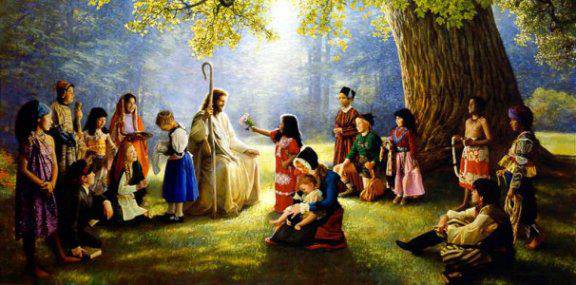
Sunday, May 20, 2012
BLOOD SACRIFICE: Why Is Sacrifice Important to God?
Blood Sacrifice: Why Is Sacrifice Important to God?.


One of the most common criticisms leveled against Christianity is the argument that this “God of love” is, in reality, a violent, bloodthirsty deity with an unhealthy appetite for blood sacrifice. After all, what sort of God connects forgiveness with the slaughter of innocent animals? Were blood sacrifice in vogue today, we certainly would be guilty of any number of animal rights violations, not to mention that modern psychology identifies the killing of animals to be an early marker for sociopathy. When seen from our modern vantage point, the blood sacrifice of the Old Testament is an understandable issue.
Definition of Sacrifice
In fact, the first seven chapters of Leviticus are replete with the laws concerning various forms of animal sacrifice. These are:
-
Burnt offerings, whereby the animal is sacrificed, drained of blood, and then completely consumed by fire.
-
Grain offerings (sometimes referred to as meat offerings in the KJV, as the Old English definition of ‘meat’ often referred simply to food), whereby grain or other foods from the field are presented and consumed by fire.
-
Peace offerings, whereby an animal is sacrificed, cleaned, cooked on the altar, and eaten as a shared meal. This is most typically a lamb.
-
Sin and guilt offerings, whereby a priest offers a blood sacrifice on behalf of the sin of another, the offering is then cleaned, cooked, and eaten by the priesthood.
The very fact that the opening seven chapters of Leviticus detail specifically how these are to be done belies the significance which blood sacrifice had to ancient Israelite worship. It still leaves the question unanswered, however… why does God demand blood sacrifice?
Animal Sacrifice
To get to the heart of this, we have to backtrack. The birth of monotheism was with Abraham*, as God revealed Himself and made covenant. It was this covenant which eventually brought forth Israel. In the ancient world, however, covenant was signified through sacrifice. An animal would be killed, its lifeblood drained, and the carcass cut in half. The two individuals making the pact would then walk, together, between the two halves of the slain animal, which signified the gravity of the vow they had made. The implication was that, should either of them violate the covenant, may the one in violation fall victim to the same fate which befell the slain beast before them. Covenant was a big deal.
So it was that, when God made covenant with Abraham, He did it in the only manner which Abraham understood – through sacrifice. This is important, because it reveals an aspect of God that is central to Christian theology: God meets us where we are, and leads us forward. Sacrifice, from this point forward, was centered around the covenant which God made with Abraham. Burnt offerings and grain offerings were offerings of livelihood, offering up to God that which we rely on, reminding us that our hope is found in God alone. Sin and guilt offerings were offerings of covenant restoration, offered on behalf of the priesthood, restoring those who had violated the covenant back into relationship with God. Peace offerings were similar, but directed at the community. The sacrificed animal would be cooked and the meal shared, that relationship with one another may be restored.
Of course, God was very clear to set limits on sacrifice, and would eventually deal with the practice itself. When Abraham was sent to offer up Isaac, his son, this was a matter of establishing proper boundaries for sacrifice. There, in Canaan, it was common practice to sacrifice the first-born child to one of the pagan gods, in the hope of slaking the deity’s wrath and preserving the lives of future children in a time where infant mortality was abysmally high. God, through Abraham’s obedience, changed this practice for His followers. Sacrifice was limited to animals that were sources of food, not children. By the Exodus, in fact, sacrifice was explicitly linked to food offerings, as the lamb slain at Passover was to be eaten as part of the ritual. In time, however, even the covenant meaning which was the basis for blood sacrifice became lost, and animal sacrifice was reduced to a ritual. Thus, by Hosea, we hear the lament of the Lord, “For I desire steadfast love and not sacrifice, the knowledge of God rather than burnt offerings. But like Adam they transgressed the covenant; there they dealt faithlessly with me.” (Hosea 6:6-7)
The End of Blood Sacrifice
So it was that Jesus ended sacrifice for all time. The covenant with Abraham was that God would make him the father of many nations, and that through him all the nations of the earth would be blessed. The fulfillment of that covenant was met in His son, Jesus. The quintessential blood sacrifice under the Old Covenant was represented in the Passover lamb. This lamb would be brought forth three days prior to Passover, and observed for three days to make sure it was without blemish or defect. On the third day, Passover Eve, the lamb would be sacrificed, drained of blood, cooked, and eaten with bitter herbs. Through this, it was remembered how the blood of the lamb protected the children from death in Egypt, and set them free from their slavery.
Jesus entered Jerusalem three days prior to Passover. For three days He was tested by Caiaphas, Annas, the Pharisees, the Sadducees, the teachers of the law, and finally Pontius Pilate… who declared that he found nothing wrong with Jesus. On Passover Eve, the Lamb of God was sacrificed on a cross, so that by His blood the angel of death may not claim us and we are set free from our slavery to sin. Jesus became the perfect sin offering.
The night He was betrayed, He broke bread, announcing it to be His body, broken for us. He took wine, and, giving thanks, offered it to us as His blood of the New Covenant. Through Eucharist, we partake of Jesus as the perfect peace offering.
The only offering remaining was the burnt offering and the grain offering – the offering of livelihood, freely given to remind us that our provision is found in God alone. This we still practice, but it is instead found in the offering of our livelihood delivered into a little wooden plate passed around on Sunday morning. Our livelihood has changed; so the offering has changed to match.
Blood sacrifice was necessary because it reflects a God who meets us where we are at and leads us from there. Blood sacrifice is complete, perfectly fulfilled, as the Lamb of God, the perfect sacrifice, offered Himself once for all. God still meets us where we are at. Hopefully, we still follow as He leads us home.
*Some scholars argue that monotheism began with Zoroastrianism in the Persian Empire, not with Judaism. These arguments are dependent on a late-date hypothesis pertaining to the penning of the Torah. There is significant grounding for an early-date authorship, however, which dates the penning of the opening books of Scripture to the Exodus or shortly thereafter. If we accept the early date, then Judaism preceded Zoroastrianism by nearly 600 years, and the birth of Zoroastrianism can be traced to the period of Israel’s captivity in Persia. During their captivity, Israel would certaily have exerted significant influence on the cultural philosophy out of which Zoroastrianism was born.
17 April 2012Related articles
- Blood Sacrifice: Why Is Sacrifice Important to God? (ofdustandkings.com)
- Unlocking the Bible’s Symbolism – Part 3 (probings.wordpress.com)
- Passage of the day: Hebrews 9:18-22 (standingatthedoor.wordpress.com)
- Blood Sacrifice (vonbandersnatch.wordpress.com)
- Unlocking the Bible’s Symbolism – Part 2 (probings.wordpress.com)
Subscribe to:
Posts (Atom)


 Posts
Posts


